What Do Ants Eat? The Complete Guide to the Ant Diet
Written from an ant keeper’s perspective, with peer-reviewed sources. Last updated: June 2026.
What do ants eat? Most ants are omnivores that live on two things: sugars for energy and protein for growth. The sugar comes from honeydew, plant nectar, tree sap, and ripe fruit; the protein comes from insects, seeds, and other small animals, alive or dead. A colony constantly shifts between these two food groups depending on the season and what its queen and larvae need at the time.
That is the short answer. The full one is far richer, because “ants” covers more than 12,000 species whose diets range from seed-hoarding desert specialists to ants that farm their own fungus underground, and from gentle nectar-sippers to nomadic predators that overwhelm prey in their thousands. This guide goes deeper than a food list: it covers the biology of how ants eat, how diet is divided inside a colony, the feeding partnerships that make ants ecologically powerful, exactly what 15 common species eat, and — for keepers — how to feed a colony properly.
Quick answer: what do ants eat?
- Sugars / carbohydrates — honeydew, nectar, sap, fruit, and sweets. Fuels the adult worker ants.
- Protein — insects, seeds, eggs, and animal matter. Feeds the queen and growing larvae.
- Water — from dew, droplets, and the moisture in food.
- Diet varies by species (some live on seeds; one group farms fungus) and shifts by season (more protein when raising young).
What 15 ant species eat, at a glance
| Ant | Diet type | Eats mainly |
|---|---|---|
| Black garden ant | Generalist | Honeydew + small insects |
| Carpenter ant | Generalist | Insects, honeydew, sweets (not wood) |
| Fire ant | Generalist | Insects, seeds, oils, sweets |
| Argentine ant | Generalist (sweet) | Honeydew, sugars, insects |
| Leafcutter ant | Fungus farmer | Cultivated fungus (not leaves) |
| Harvester ant | Granivore | Seeds |
| Weaver ant | Predator | Insects, nectar |
| Bullet ant | Predator | Nectar + small arthropods |
| Pharaoh ant | Scavenger (protein) | Grease, meat, sweets |
| Ghost ant | Scavenger (sweet) | Sweet foods, some protein |
| Army ant | Predator | Other insects/arthropods |
| Trap-jaw ant | Predator | Springtails, small arthropods |
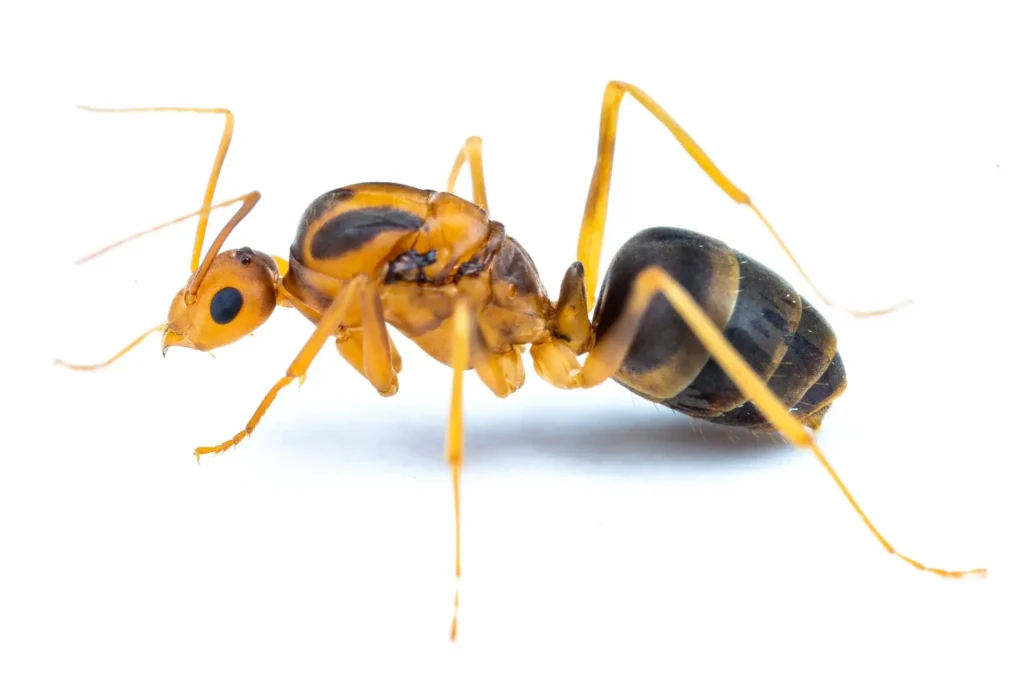
| Yellow crazy ant | Generalist | Honeydew, insects |
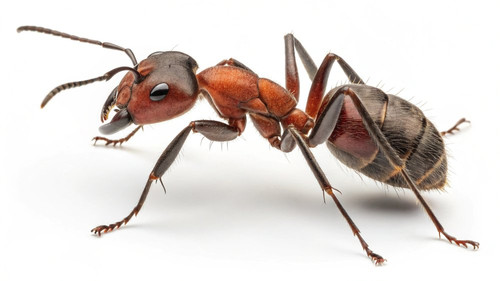
| Red wood ant | Generalist | Honeydew + forest insects |
| Acrobat ant | Generalist | Honeydew, insects, sweets |
Each species has a full feeding guide linked further down.
The two macronutrients every ant colony runs on
Almost everything about an ant’s diet comes back to a split between two macronutrients, and that split maps directly onto who eats what inside the colony.
Carbohydrates are the fuel. Adult worker ants burn enormous amounts of energy walking, carrying loads many times their weight, and defending the nest, and they get that fuel almost entirely from sugary liquids: honeydew secreted by aphids and other sap-sucking insects, floral and extrafloral nectar, tree sap, fruit juice, and the sweets they find in a kitchen. Adults are, in effect, restricted to a liquid diet — a point most diet articles skip but which explains a great deal of ant behavior.
Protein is the building material. It is what turns into new ants, so colonies pursue it hardest when there is brood to raise, taking captured live prey, scavenged dead insects, seeds, eggs, and animal tissue. A colony’s hunger for protein is not constant; it rises and falls with the queen’s egg-laying.
Why adult ants can barely eat solid food
An adult ant’s narrow “waist” — the petiole between thorax and abdomen —physically limits what can pass into its digestive tract. Food first enters the crop, often called the “social stomach,” a storage chamber that holds liquid for sharing rather than for the ant’s own digestion. A muscular valve, the proventriculus, controls how much passes through to the true stomach, and solid particles are filtered out in the infrabuccal pocket, a small chamber behind the mouthparts, then expelled as a pellet. This is why ants drink droplets and carry crumbs rather than chewing and swallowing them whole — most processing of solids is outsourced to the larvae.
Trophallaxis: how a few foragers feed the whole colony
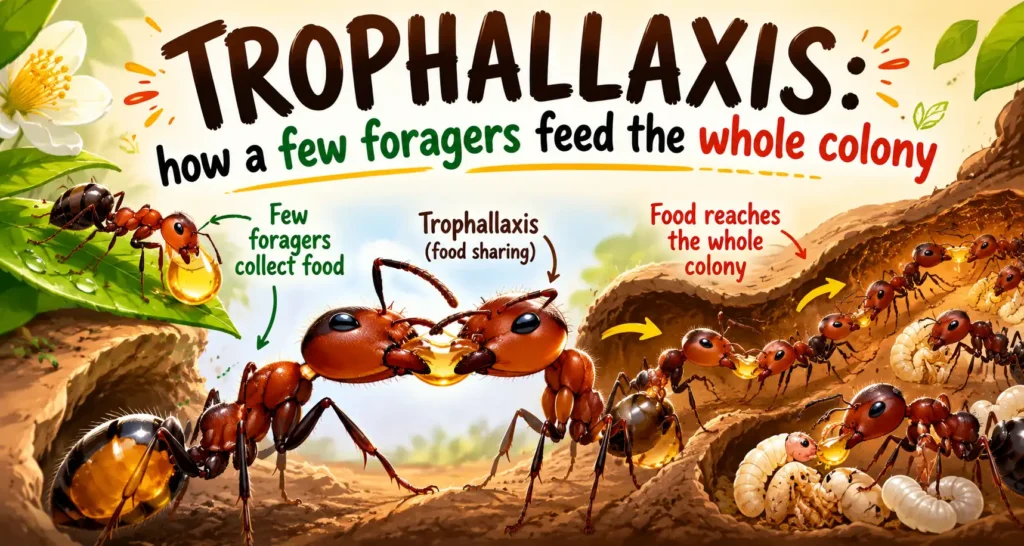
Ants distribute food through trophallaxis, the mouth-to-mouth transfer of liquid from one ant’s crop to another. A single returning forager can feed dozens of nestmates this way, which is why only a small fraction of any colony is ever out foraging — the collectors feed the many, including the queen, who almost never leaves the nest. Trophallaxis moves more than calories: it also circulates colony-identifying chemicals and gut microbes, binding the colony together as a single “superorganism.” It is also why a slow-acting bait works — foragers share it through trophallaxis until it reaches the queen and brood.
What each caste eats: queen, workers, larvae, males
Diet inside a colony is divided by caste, and this is where ant feeding gets genuinely advanced.
The queen has the most specialized diet of all. In many species she founds her colony claustrally: she seals herself into a chamber and raises her first workers without eating at all, metabolizing her now-useless flight muscles and stored fat to produce eggs and feed larvae. Once workers take over foraging, her diet becomes heavily protein-rich to sustain continuous egg-laying. Other species found semi-claustrally, with the young queen leaving to forage during this stage.
The larvae are the colony’s protein processors. In many ants they are the only stage able to digest solid food: workers press captured prey against them, the larvae break it down with enzymes, and the released nutrients are shared back to the colony. Larvae destined to become queens are fed far more, and richer, food than those that become workers — diet, not genetics, often decides caste.
Workers live mainly on the carbohydrates they forage, taking little protein for themselves once mature, since they no longer grow. Males are short-lived, fed by workers, and exist only to mate.
How ants find and recruit to food
Ants locate food mostly by smell, sweeping the air and surfaces with their antennae. Once a scout finds a worthwhile source, it returns laying a pheromone trail so nestmates can follow the exact route. Recruitment styles vary by species and reward: some use tandem running, where one ant physically leads a single follower; others use mass recruitment, laying strong trails that summon hundreds within minutes when a rich find appears. The trail, not the individual ant, is why one scout in your kitchen becomes a marching column — and why wiping the trail disrupts them more than killing the ants you can see.
How an ant’s diet changes with the seasons
Ant diet swings through the year, which is why ants that ignored your sugar in spring may swarm it by late summer. When the queen is laying heavily and larvae are developing — usually spring and early summer — colonies crave protein to convert into new workers, and this is when ants most aggressively hunt insects and carry off meat or pet food. As brood-rearing slows in late summer and autumn, many species pivot toward carbohydrates to build energy reserves for the cold. In winter, most temperate ants enter a dormant state called diapause, living off reserves and eating little until spring. Matching food to this cycle is the single most useful insight for both controlling ants and feeding a captive colony.
The advanced feeding strategies that make ants ecologically powerful
Beyond simple scavenging, several ant lineages have evolved sophisticated ways of producing or securing food. These partnerships are what separate a deep guide from a shallow one.
Aphid farming (trophobiosis). Many ants tend “herds” of aphids, scale insects, and treehoppers, protecting them from predators and even moving them to fresh plants, in exchange for the sugary honeydew the insects excrete — effectively domesticating their herds the way humans keep dairy cattle.
Fungus farming. Leafcutter ants and their relatives (the attine ants) practice true agriculture: they cut and carry plant matter underground to cultivate a specific fungus, then eat the fungus and its nutrient-rich growths. They don’t eat the leaves at all — the leaves are compost.
Seed harvesting and dispersal. Granivorous harvester ants gather and store seeds in underground granaries. Many plants exploit this through myrmecochory — seeds carry a fatty appendage called an elaiosome that the ants eat, discarding the still-viable seed away from the parent plant, so the ant gets a meal and the plant gets a gardener.
Living larders and plant partnerships. “Honeypot” ants keep specialized workers, called repletes, that gorge on honeydew until their abdomens swell into living storage tanks for lean times. Other ants live inside specialized plants (myrmecophytes) such as bullhorn acacias, feeding on the nectar and protein bodies the plant provides while defending it from herbivores.
What ants eat in the wild, in your home, and in an ant farm
The same species can eat very differently depending on where it lives.
In the wild, ants forage opportunistically — tending aphids for honeydew, hunting and scavenging insects, gathering seeds, and sipping nectar. They are one of nature’s great cleanup crews and seed dispersers, and they are also prey themselves for birds, frogs, spiders, and specialized hunters, placing them squarely in the middle of the food web.
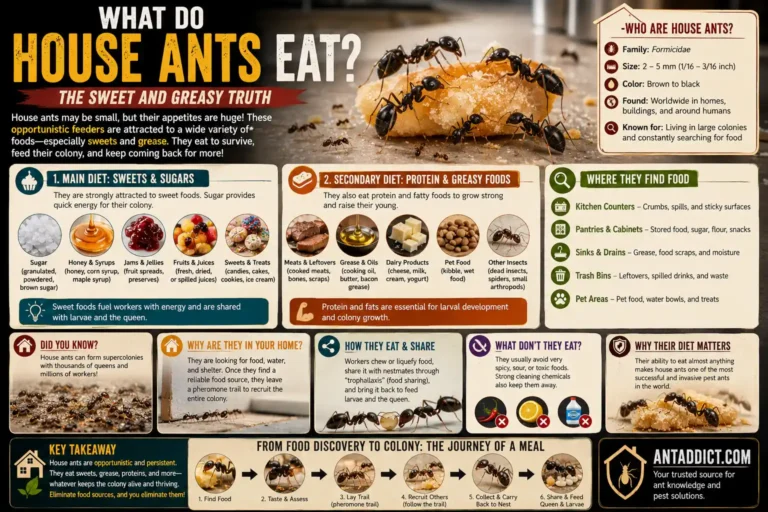
In your home, ants chase the easiest version of that diet: sugary spills and syrups, greasy or oily residue, pet food, and protein scraps. Which one draws a given species depends on the ant and the season.
How to feed pet ants in a formicarium
If you keep ants, the goal is to recreate both food groups cleanly. The two staples are a carbohydrate source (sugar water at roughly one part sugar to three parts water, or a drop of honey) and a protein source (small feeder insects such as fruit flies, crickets, or mealworms, or a commercial protein jelly). Seed-eating species like harvesters need a steady supply of seeds instead of insects.
| Colony stage | Protein | Carbohydrate | Notes |
|---|---|---|---|
| Founding queen (fully claustral) | none yet | water only | She lives on her reserves; don’t disturb or feed until the first workers appear |
| Founding queen (semi-claustral) | tiny insect piece | sugar drops | Offer small amounts; remove if untouched |
| Small colony (≤50 workers) | rice-grain-sized insect, 1–2×/week | sugar source 2–3×/week | Feed in the outworld; remove leftovers in 24–48h to prevent mold |
| Growing colony | scale up portions with population | sugar always available | Increase protein during active brood-rearing |
| Harvester species (any stage) | — | — | Seed mix as the staple; keep a stocked seed chamber |
Two rules keep a captive colony healthy: never leave uneaten food longer than a day or two (mold is deadly to ants), and always offer water through a method that won’t drown them, such as a cotton-plugged tube or a damp sponge.
What ants don’t eat (and a few myths)
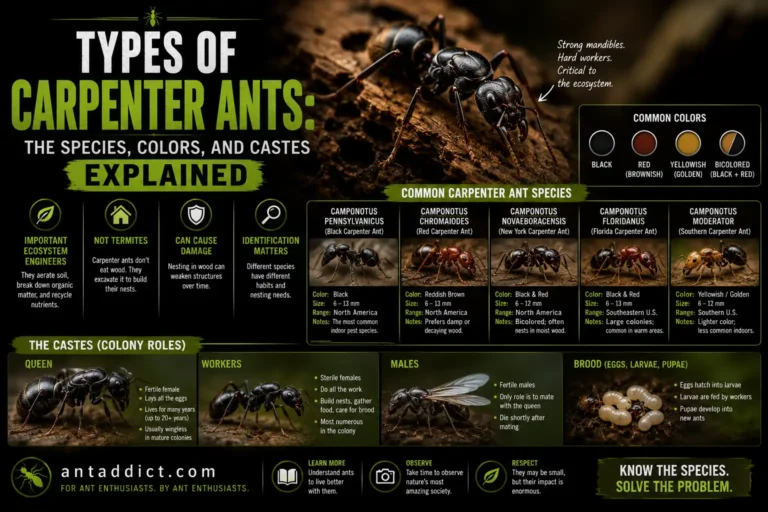
Two myths are worth correcting up front: carpenter ants do not eat wood (they only tunnel through it to nest), and leafcutter ants do not eat leaves (they farm fungus on them). Ants are also generally uninterested in artificial sweeteners such as aspartame and sucralose, because these provide none of the carbohydrate energy the ants are actually seeking — which is why a sweetener “trap” usually fails where real sugar succeeds.
The 5 ant diet types
Despite the variety, nearly every ant fits one of five feeding strategies, which is the simplest way to make sense of the species below:
- Honeydew-and-insect generalists — the most common; they farm aphids and scavenge or hunt insects.
- Predators (insectivores) — active hunters living mainly on other arthropods.
- Granivores (seed-eaters) — specialists that collect and store seeds.
- Fungus farmers — ants that grow and eat fungus rather than their gathered plant matter.
- Household scavengers — opportunists thriving on the sweets, fats, and proteins in human spaces.
What do different types of ants eat?
A quick diet summary for 15 common ant species. Each links to a full feeding guide.
What do black garden ants eat?
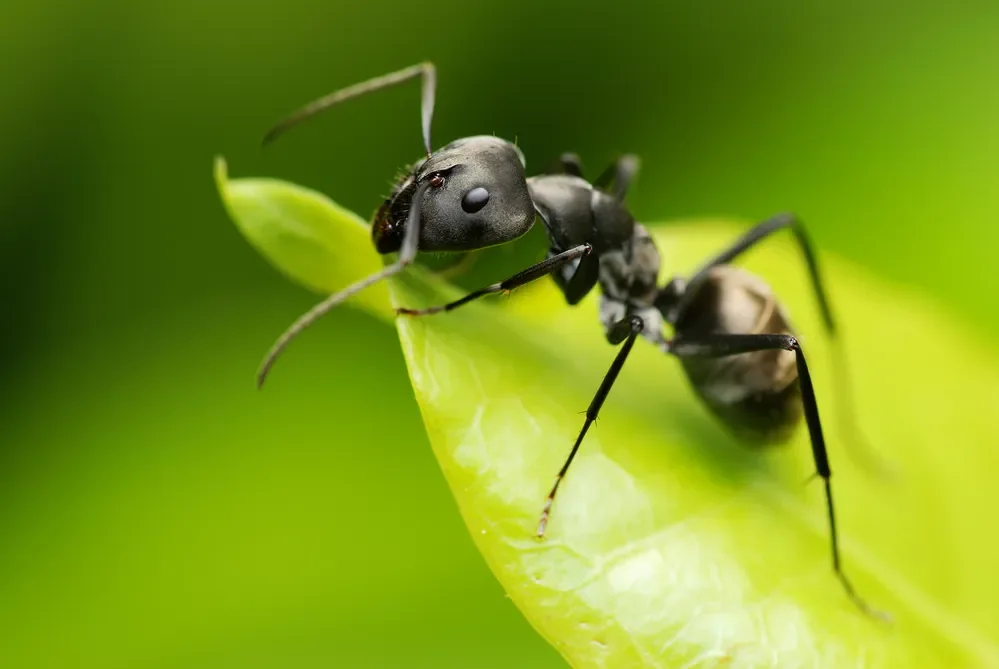
Black garden ants (Lasius niger) are classic honeydew-and-insect generalists. They farm and protect aphids for honeydew, supplement with small insects for protein, and readily raid household sweets. They are the most common ant in European gardens and homes.
Read More: What Do Black Garden Ants Eat? Top 5 Foods They Love
What do carpenter ants eat?
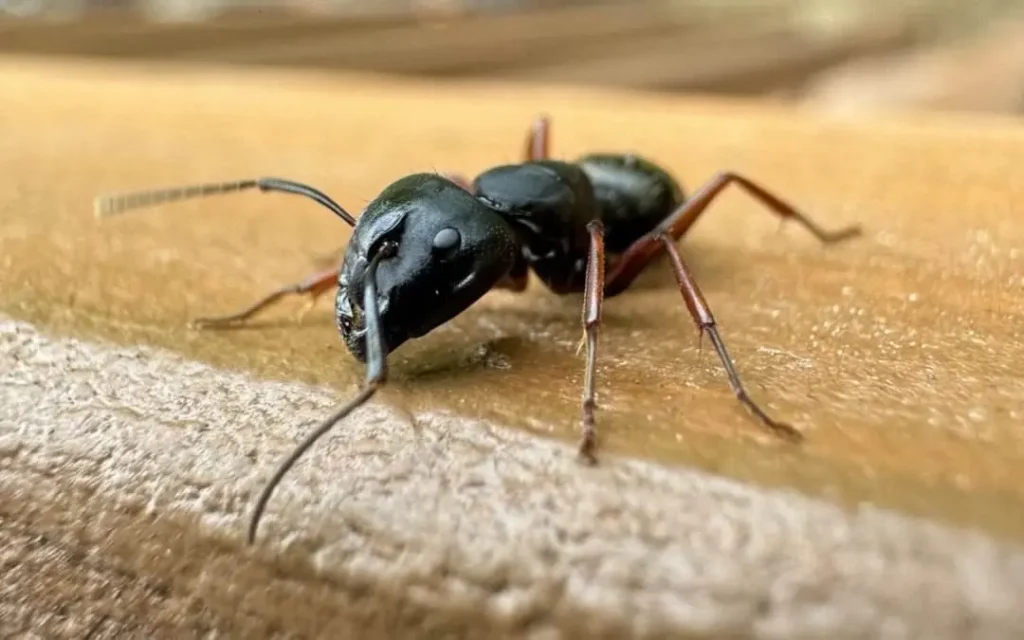
Despite the name, carpenter ants (Camponotus pennsylvanicus) do not eat wood — they only excavate it to nest. Their diet is insects (living and dead), honeydew, plant juices, and household sweets and proteins.
Read More: What Do Carpenter Ants Eat ? A Complete, Science-Backed Guide
What do fire ants eat?
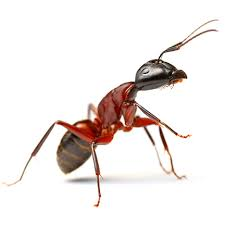
Fire ants (Solenopsis invicta) are aggressive omnivores, eating insects, seeds, dead animals, and sugary liquids, with a strong pull toward oily and greasy foods. That broad appetite helps make them so invasive.
Read More: What Do Fire Ants Eat? Inside the Diet of a Predator
What do argentine ants eat?
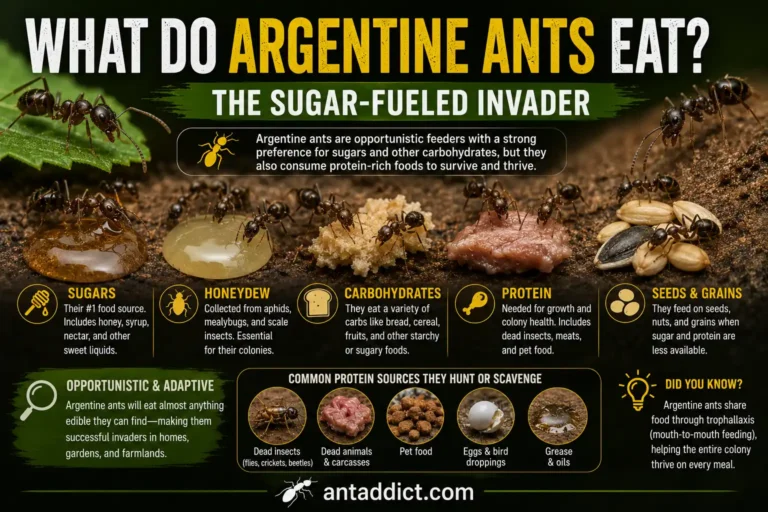
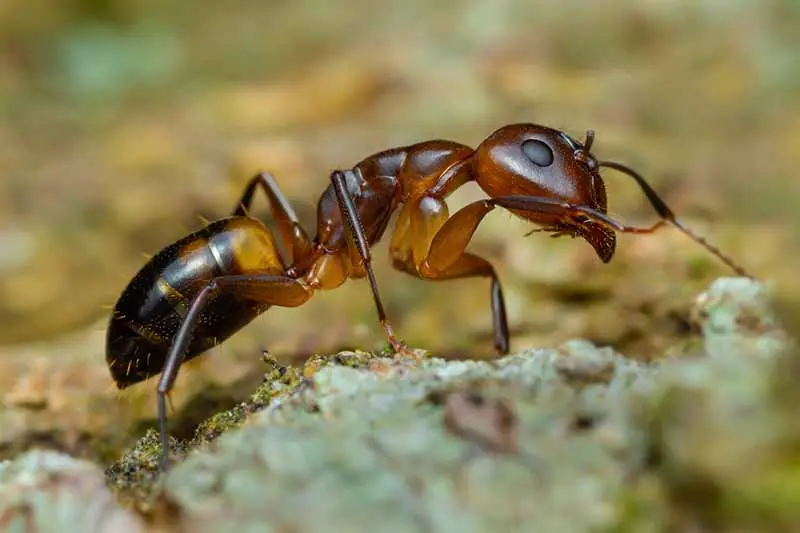
Argentine ants (Linepithema humile) strongly favor sugars and are prolific honeydew-farmers, while also taking insects and protein. Their sweet tooth and cooperative supercolonies let them dominate food sources and displace native ants.
Read More: What Do Argentine Ants Eat? The Sugar-Fueled Invader
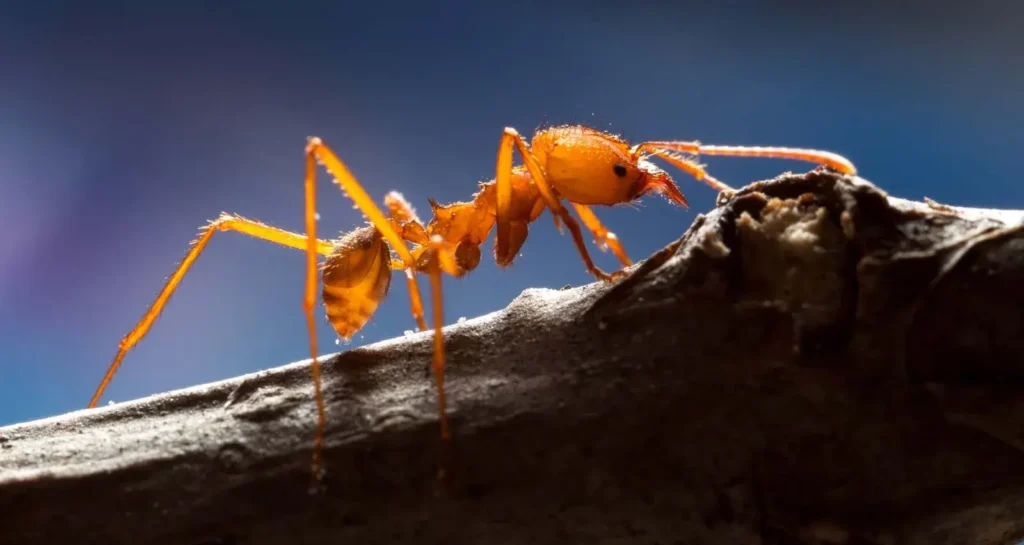
What do leafcutter ants eat?
Leafcutter ants (Atta cephalotes) don’t eat the leaves they carry. They are fungus farmers — they chew the leaves into pulp to cultivate a fungus underground, and it’s the fungus they actually eat.
Read More: What Do Leafcutter Ants Eat? The Farmers of the Ant World
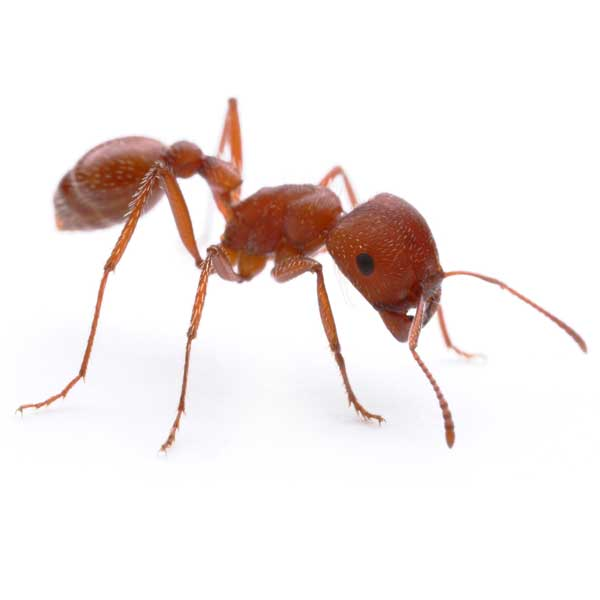
What do harvester ants eat?
Harvester ants (Pogonomyrmex barbatus) are granivores — seed specialists that collect, transport, and store seeds in underground granaries and live mainly on them, with the occasional insect. They are a keystone seed disperser in deserts.
Read More: What Do Harvester Ants Eat? The Seed Specialists of the Ant World
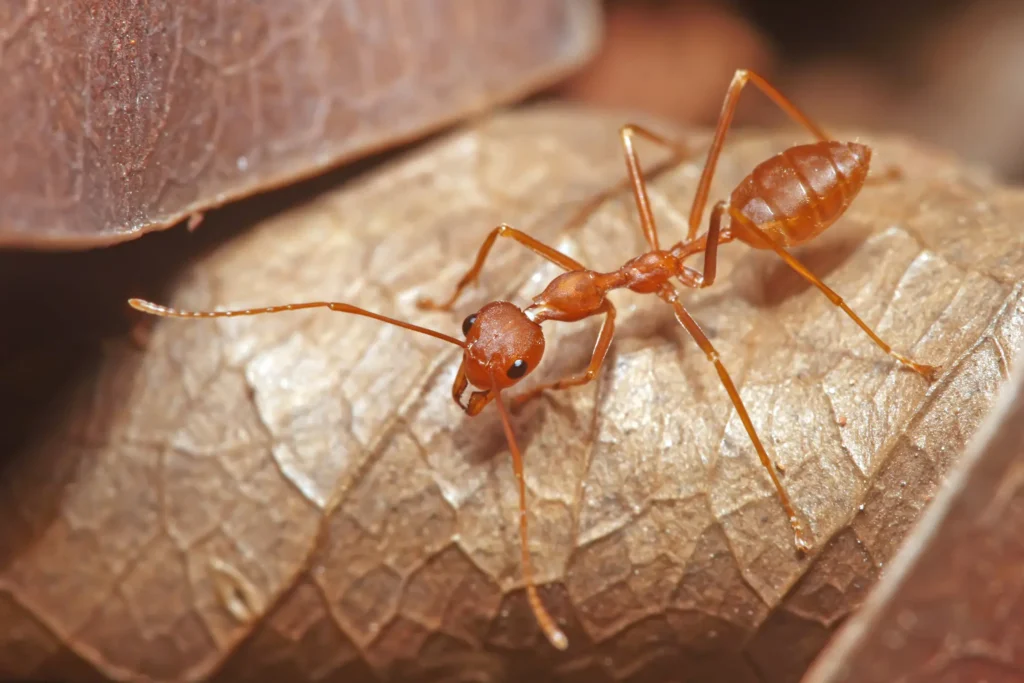
What do weaver ants eat?
Weaver ants (Oecophylla smaragdina) are aggressive arboreal predators, hunting insects and arthropods in the canopy while also collecting nectar and honeydew. Their predation makes them a natural pest-control ally in tropical orchards.
Read More: What Do Weaver Ants Eat? The Treetop Hunters and Farmers
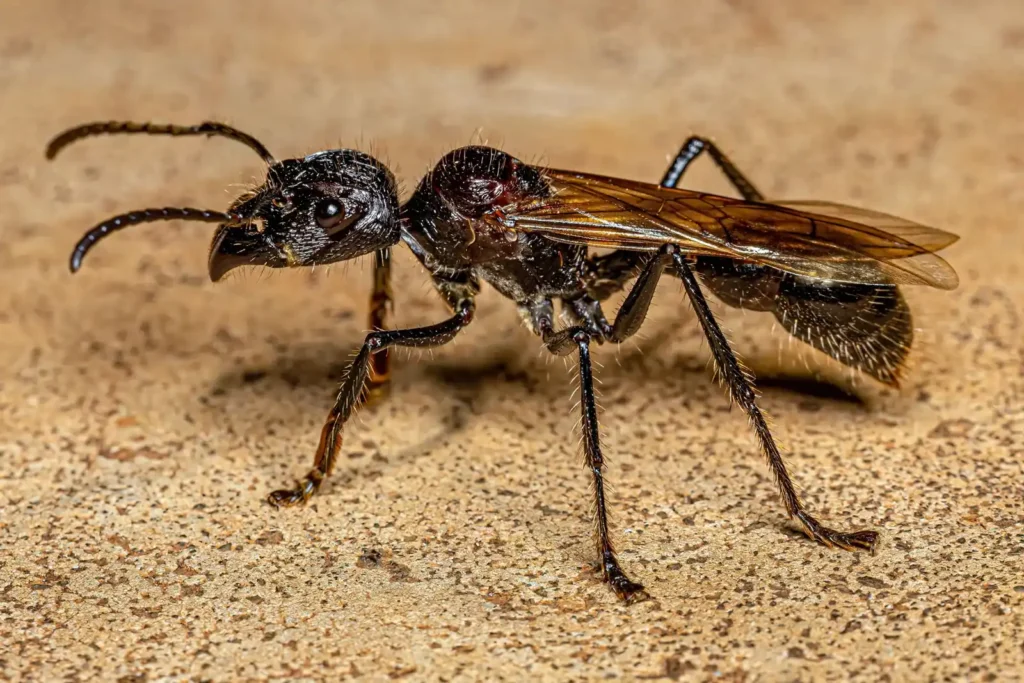
What do bullet ants eat?
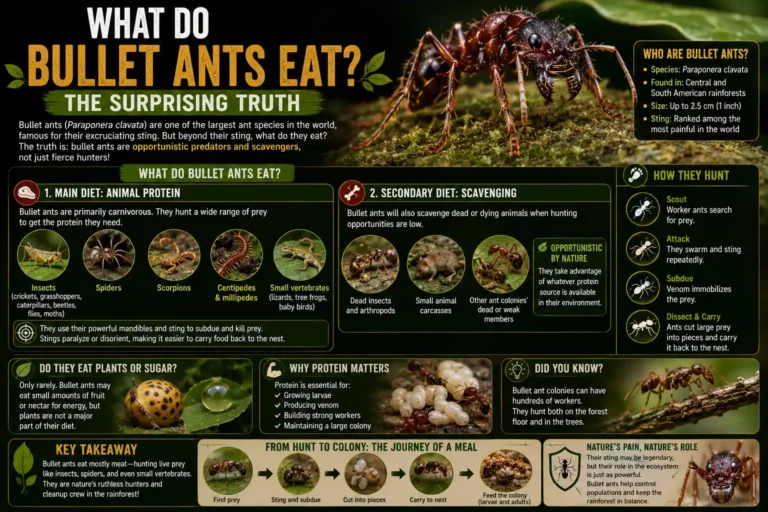
Bullet ants (Paraponera clavata) — famous for the most painful insect sting — forage in the rainforest canopy for nectar and small arthropods, pairing sugary plant secretions for energy with captured insects for protein.
What do pharaoh ants eat?
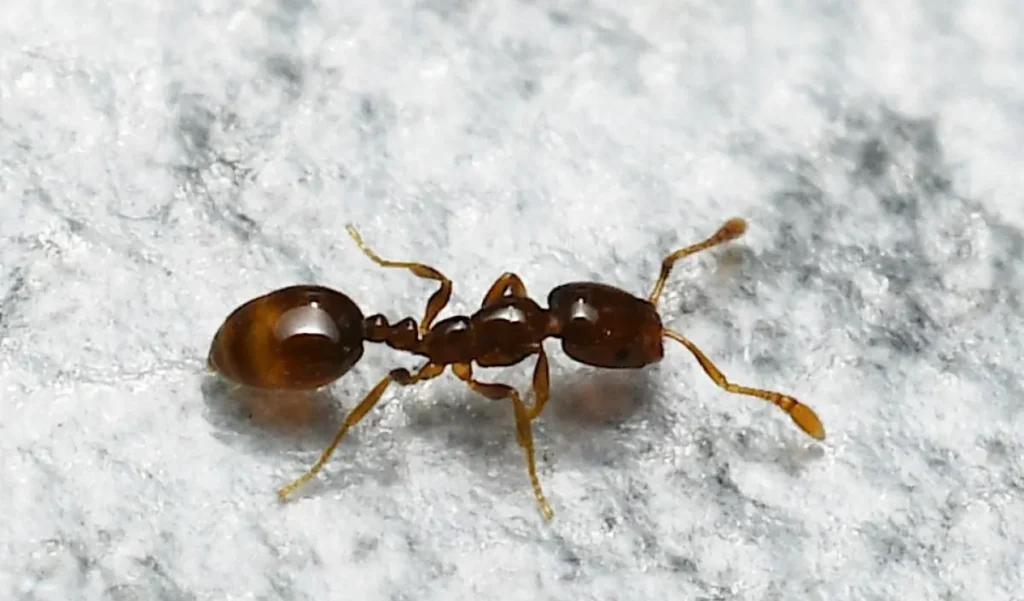
Pharaoh ants (Monomorium pharaonis) are a major indoor pest with a strong appetite for protein and fats — meats, grease, dead insects — alongside sweets. That protein preference is key to baiting them, since sugar-only baits often fail.
Read More: What Do Pharaoh Ants Eat? The Relentless Household Pest
What do ghost ants eat?
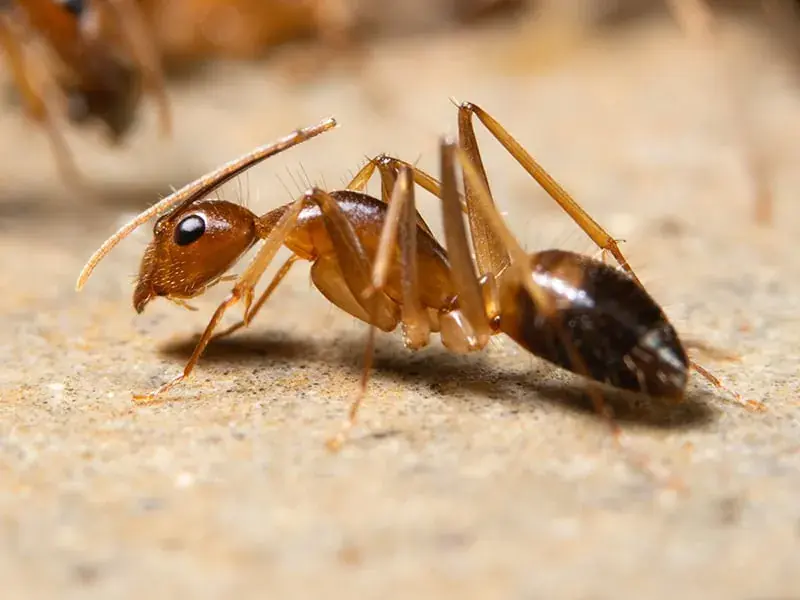
Ghost ants (Tapinoma melanocephalum) — tiny and pale — feed mainly on sweet foods, including honeydew and sugary residues in kitchens, with some protein in the mix.
Read More: What Do Ghost Ants Eat? The Sweet-Obsessed Tramp Ant
What do army ants eat?
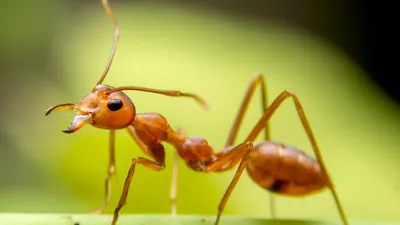
Army ants (Eciton burchellii) are pure predators, living almost entirely on other insects and arthropods captured in massive coordinated raids, and occasionally small vertebrates. Unlike most ants, they barely touch sugars.
Read More: What Do Army Ants Eat? Nature’s Unstoppable Swarm
What do trap-jaw ants eat?
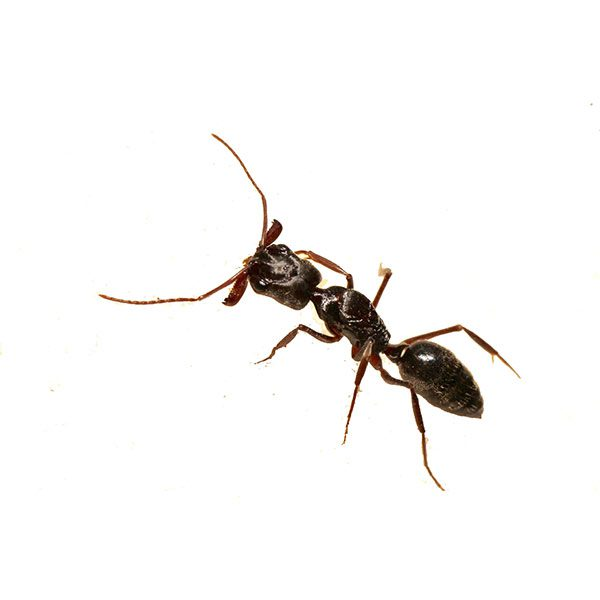
Trap-jaw ants (Odontomachus bauri) are specialized predators that use lightning-fast, spring-loaded mandibles to catch fast prey like springtails and other small arthropods.
Read More: What Do Trap-Jaw Ants Eat? The Fastest Jaws in Nature
What do yellow crazy ants eat?
Yellow crazy ants (Anoplolepis gracilipes) are destructive invasive omnivores, farming honeydew from scale insects, hunting and scavenging other insects, and exploiting a wide range of foods.
Read More: What Do Yellow Crazy Ants Eat? The Diet That Devastates Islands
What do red wood ants eat?
Red wood ants (Formica rufa) combine large-scale aphid farming for honeydew with heavy predation on forest insects. A single mound can take tens of thousands of prey insects a day, regulating forest pests.
Read More: What Do Red Wood Ants Eat? The Forest’s Voracious Guardians
What do acrobat ants eat?
Acrobat ants (Crematogaster spp) — named for raising the abdomen when disturbed — feed on honeydew and insects (live and dead) and will pursue household sweets, tending aphids for a steady honeydew supply.
Read More: What Do Acrobat Ants Eat? The Sweet-Toothed Treetop Acrobats
FAQ
Do ants eat grass?
Most ants cannot digest cellulose and do not eat grass directly. Leafcutter ants cut grass blades as a substrate for fungus cultivation — they eat the fungus, not the grass. Harvester ants collect grass seeds.
Do ants eat each other?
Yes. Army ants raid colonies for eggs and larvae. During scarcity, queens consume unfertilized eggs. Some species have undertaker workers who consume dead nestmates as protein recycling.
Do ants eat wood?
No ant species eats wood for nutrition. Carpenter ants excavate it for nesting but gain zero nutritional value from cellulose — all structural damage is from construction, not feeding.
Are ants attracted to artificial sweeteners?
No. Ants cannot metabolize artificial sweeteners like stevia or aspartame. Effective bait requires real, metabolizable sugar.
What do ant larvae eat?
Ant larvae eat pre-chewed insect protein, eggs, and liquid foods delivered by nurse workers via trophallaxis. They are the colony’s primary protein consumers and are prioritized for feeding even during food scarcity.
How long can ants survive without food?
Most workers survive one to two weeks without food. Queens, with larger fat reserves, can fast for months — which is why removing food does not eliminate an established colony.