What Do Black Garden Ants Eat? Top 5 Foods They Love.
Written from an ant keeper’s perspective, with peer-reviewed sources. Last updated: June 2026.
What do black garden ants eat? Black garden ants (Lasius niger) eat two main foods: honeydew, the sugary liquid they harvest from farmed aphids, and protein from small insects they hunt or scavenge. The carbohydrate fuels the adult workers, while the protein feeds the queen and her growing larvae.
This guide covers exactly what black garden ants eat in the garden, in your home, and across the seasons, what scientific research reveals about their feeding, and, for keepers, precisely how to feed a Lasius niger colony from a lone founding queen to a thriving nest. For the bigger picture of how every ant feeds, see our main guide on what do ants eat.
Quick answer: what do black garden ants eat?
- Main food: honeydew, harvested from farmed aphids (their staple carbohydrate).
- Protein: small insects, both living prey and scavenged dead ones.
- In your home: sweet foods such as sugar, syrup, honey, jam, and fruit, plus occasional greasy or protein scraps.
- In captivity: sugar water or honey for energy, and small feeder insects for protein.
The black garden ant diet at a glance
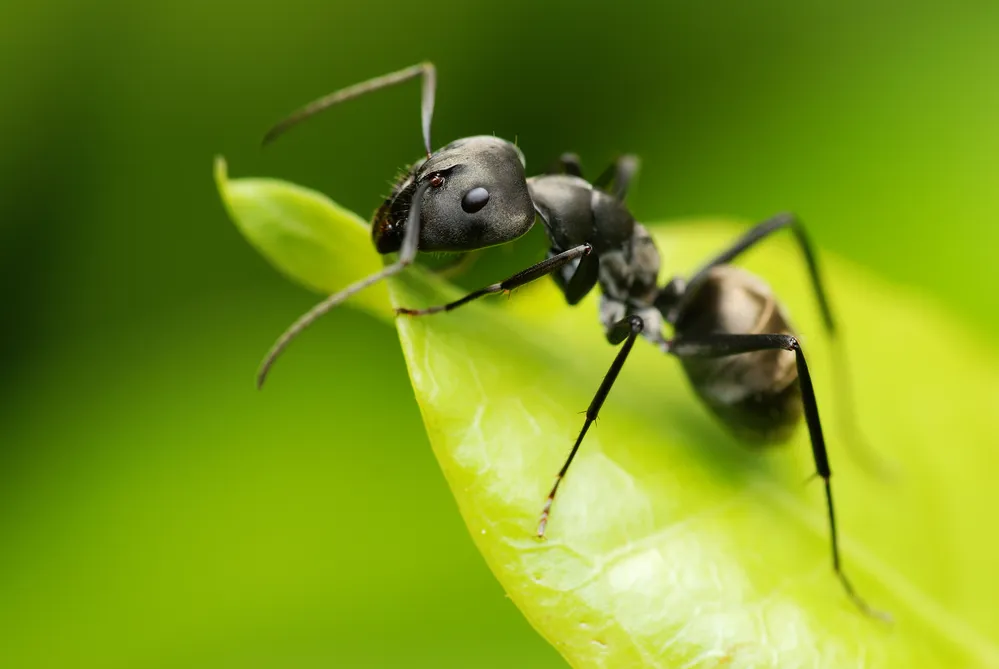
Like most ants, black garden ants balance two needs. Carbohydrates keep the adult workers running, and they get almost all of theirs from honeydew. Protein builds new ants, so it goes to the queen and the larvae. What sets Lasius niger apart is how dedicated they are to securing a steady honeydew supply, which makes aphid farming the center of their feeding life.
A quick note on range, because it shapes their diet: the black garden ant is native to Europe and temperate Asia, where it is the most common garden and house ant. It is not widely established in North America, so if you are in the US and seeing a small black ant indoors, it is more likely a related species such as a field ant or odorous house ant, which have broadly similar diets.
Honeydew and aphid farming: their signature food
Black garden ants are among the most committed aphid farmers in the insect world. Aphids feed on plant sap and excrete a sugary waste called honeydew, and black garden ants harvest it straight from the source. Honeydew is mostly water and sugars, including melezitose, a sugar that ants find especially attractive, along with small amounts of amino acids that add a little protein to the harvest. They stroke the aphids with their antennae to encourage honeydew release, in effect “milking” them.
The relationship goes well beyond collecting. Black garden ants actively protect their aphid herds from predators such as ladybugs and lacewings, and they will move aphids to fresher, better feeding spots on a plant. Some colonies even gather aphid eggs in autumn, overwinter them safely inside the nest, and carry them back out onto plants in spring, securing next season’s honeydew supply before it exists.They also tend root-feeding aphids underground, so a colony’s honeydew harvest is not limited to what you can see above the soil.
What protein do black garden ants eat?
For protein, black garden ants hunt and scavenge small insects and other invertebrates, and they readily collect dead insects they come across near the nest. This animal matter is mostly destined for the larvae and the egg-laying queen rather than the foraging workers. They are opportunists: a black garden ant worker will take whatever small prey or carrion it can manage, then carry it home to feed the brood.
What do black garden ants eat in the house?
Across Europe and temperate Asia, black garden ants are one of the most common ants to appear indoors in summer, and when they do, they are usually after sugar. They trail inside for sweet foods like sugar, syrup, honey, jam, and ripe fruit, and they will sometimes take greasy or protein-rich scraps too. Because they recruit nestmates with a pheromone trail, a couple of scouts can become a marching line within hours, which is why a single spill can attract so many so quickly.
How a black garden ant’s diet changes with the seasons
In spring and early summer, the queen lays heavily and the colony is full of hungry larvae, so demand for protein peaks and workers hunt insects more aggressively. Mid to late summer brings the nuptial flight, the famous “flying ant day,” when winged males and new queens leave the nest to mate. Through the warm months honeydew remains the steady carbohydrate staple. In winter the colony enters a dormant state called diapause, living off built-up reserves and eating very little until spring.
What do the queen and larvae eat?
A newly mated black garden ant queen founds her colony claustrally: she seals herself into a small underground chamber and raises her first batch of workers without eating at all, drawing on her body reserves and her now-useless wing muscles to produce eggs and feed the larvae. Once those first workers begin foraging, they bring back protein to keep the queen laying. Black garden ant queens are famously long-lived, with one documented queen surviving roughly 28 to 29 years, among the longest lifespans recorded for any insect.
The larvae, meanwhile, are the colony’s protein processors, and in Lasius niger they handle much of the solid-food digestion that the adults cannot, sharing the broken-down nutrients back through the colony.
What scientific research reveals about black garden ant feeding
Black garden ants are one of the most studied ants in the world, so their feeding is unusually well documented. A few findings stand out.
Colonies collectively choose the best food. Classic work on Lasius niger recruitment (Beckers, Deneubourg & Goss, 1993) showed a colony behaves less like a crowd of individuals and more like a single decision-making system. When scouts find competing food sources, the pheromone trail to the richer or closer source builds faster, and the colony quickly concentrates its foragers there. This is why a black garden ant trail seems to “know” the best route to a sugar spill within hours.
The aphid partnership is actively managed. Two studies make this concrete. In their 2005 review “Ecology and Evolution of Aphid-Ant Interactions,” Stadler and Dixon document that being tended by ants carries real fitness costs for the aphids, so for the ants this is managed livestock, not a chance meal. And an open-access Lasius niger study, Oliver, Leather and Cook (2012), “Ant Larval Demand Reduces Aphid Colony Growth Rates,” found that the presence of larvae in the nest significantly slows the growth of tended aphid colonies. The authors interpret this as the colony adjusting how it works its aphids based on internal demand, treating them either as a renewable sugar source to be protected or as a protein-rich meal.
Colonies regulate nutrients, not just calories. Research on ant nutrition (Dussutour & Simpson, 2009) shows colonies actively balance how much carbohydrate and protein they take in to match what the brood needs, holding protein intake tightly controlled even while collecting carbohydrate in surplus. That regulation is the science behind the seasonal protein swing every keeper notices.
How their feeding affects your garden
Because black garden ants farm aphids for honeydew, their presence can indirectly support aphid populations on garden plants: the ants shield the aphids from natural predators, so colonies of both can grow side by side. This is why gardeners so often find ants and aphids on the same plant. At the same time, black garden ants hunt and scavenge many other small insects, so they are not purely a pest. If aphids are damaging your plants, controlling the aphids directly is usually more effective than targeting the ants.
How to feed black garden ants in captivity
Lasius niger is the classic beginner species for ant keeping, because the colonies are hardy, grow quickly, and are easy to feed. The two staples are a carbohydrate source (sugar water at roughly one part sugar to three parts water, or a small drop of honey) and a protein source (small feeder insects such as fruit flies, or pieces of a larger insect). Always provide water in a way that will not drown them, such as a cotton-plugged test tube.
| Colony stage | Protein | Carbohydrate | Notes |
|---|---|---|---|
| Founding queen (claustral) | none yet | water only | She lives on her reserves. Do not feed or disturb her until the first workers appear, usually a few weeks |
| First workers (nanitics) appear | a freshly killed fruit fly, 1x/week | a few drops of sugar water | Start small. Remove anything untouched within 24 to 48 hours |
| Small colony (up to ~50 workers) | small insect, 1 to 2x/week | sugar source 2 to 3x/week | Feed in the outworld; clear leftovers to prevent mold |
| Growing colony | scale portions up with the population | keep sugar available | Increase protein during active brood-rearing |
Two rules keep a captive black garden ant colony healthy: never leave food long enough to grow mold, which is dangerous to ants, and always keep a clean water source available.
Free Download: The Lasius niger First-Year Feeding Playbook
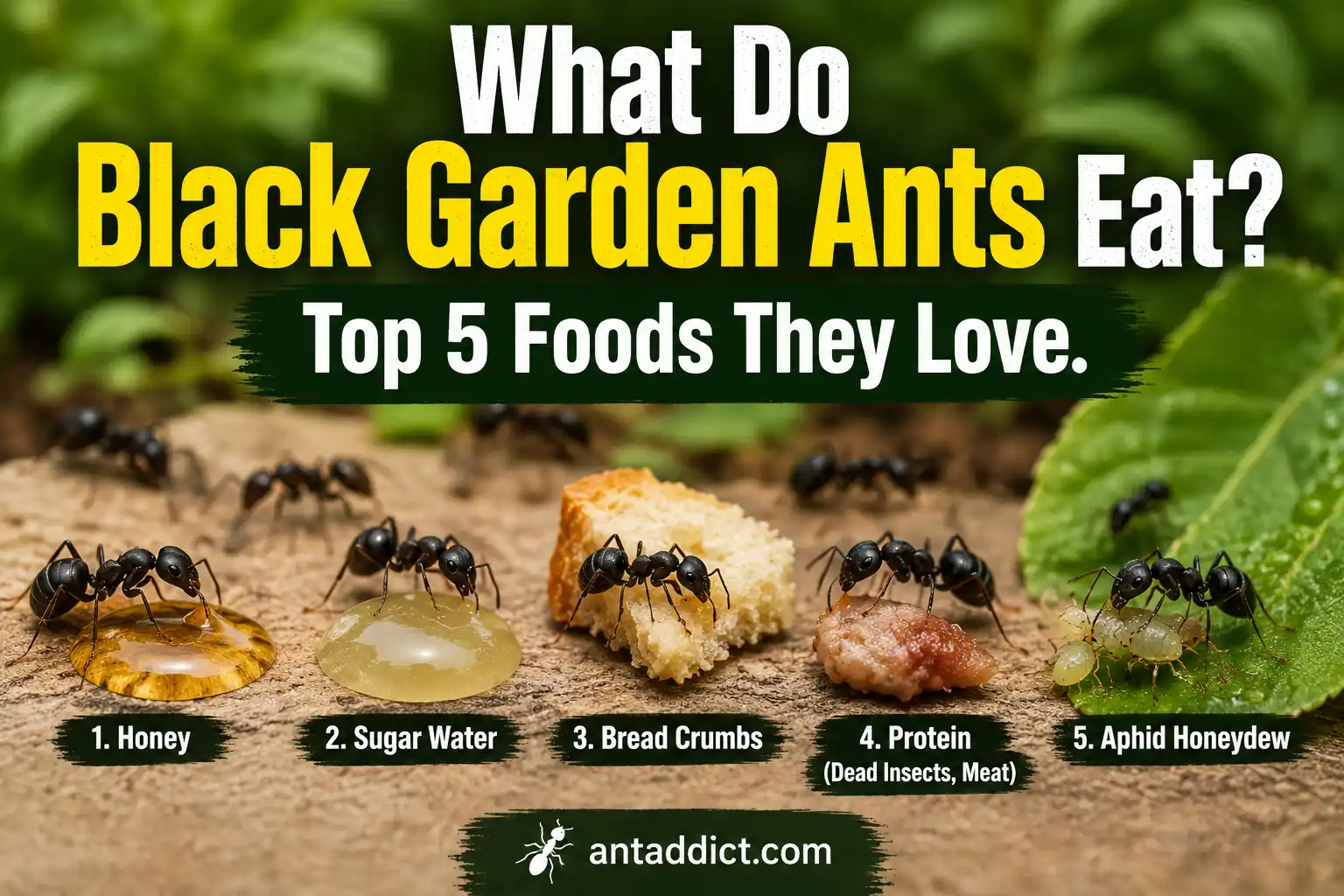
The 5 foods black garden ants love most
If you want a simple shortlist, these are the five foods black garden ants most reliably eat, whether in the wild or in a formicarium:
| Food | Why they take it |
|---|---|
| 1) Honeydew | Their natural staple, farmed from aphids |
| 2) Sugar water or diluted honey | The easiest energy source for adults and captive colonies |
| 3) Fruit flies and other small insects | Key protein for the queen and brood |
| 4) Ripe or sweet fruit | Sugary food they feed on readily |
| 5) Scavenged dead insects | Free protein collected near the nest |
They will sometimes nibble bread for its sugars or fats, but they ignore artificial sweeteners, which offer none of the real energy they want.
What black garden ants do not eat (and a couple of myths)
Black garden ants do not eat wood, soil, or plant leaves. When you see them swarming over a plant, they are tending aphids on it for honeydew, not eating the plant itself. They are also not interested in artificial sweeteners, because those offer none of the real sugar energy they are looking for, which is why a sweetener bait usually fails where ordinary sugar works.
Conclusion
So, what do black garden ants eat? At heart, just two things: honeydew for energy and protein for growth. What sets them apart is how they secure that sugar, farming and defending aphids like livestock rather than finding it by chance, while hunting and scavenging insects to feed the queen and her larvae. Grasp that simple split and you understand almost everything about their behavior, from why they swarm a sugar spill in summer to how to raise a thriving colony of your own. For the wider picture across every species, see our complete guide to what do ants eat.
FAQ
Do black garden ants eat aphids?
Mostly no. They farm aphids for honeydew and actively protect them, so a healthy aphid is worth far more alive than eaten. They may occasionally remove sick or surplus aphids, but the relationship is farming, not hunting.
What do black garden ants eat in the house?
Sweet foods are the main draw: sugar, syrup, honey, jam, and ripe fruit, with the occasional greasy or protein scrap. A small sugary spill is enough to bring a trail indoors.
What do you feed a black garden ant queen?
During her claustral founding stage, nothing. She lives on her own reserves until her first workers appear, so she only needs to be left undisturbed with a water source. Once workers are foraging, the colony feeds her protein-rich food to support egg-laying.
What do black garden ant larvae eat?
Protein, fed to them by the workers. The larvae also help digest solid food and share the nutrients back to the rest of the colony.
Do black garden ants eat grass or plants?
No. They do not eat plant material. They visit plants to harvest honeydew from the aphids living on them.
What do black garden ants eat in winter?
Very little. The colony enters diapause and lives off the reserves it built up in autumn, eating almost nothing until spring.
Are black garden ants attracted to sugar?
Strongly. Sugar and other carbohydrates are their primary fuel, so sweet foods are the single most reliable thing to attract them.
How do black garden ants find food?
By scent. Scouts search for food using their antennae, and once one finds a worthwhile source it returns to the nest laying a pheromone trail. Nestmates follow that trail, reinforcing it as they go, which is how a colony forms a fast, organized supply line to a food source.
Do black garden ants damage plants?
Not directly. They do not eat plant tissue. The indirect issue is that they farm and protect aphids, which can let aphid numbers climb on a plant. If your plants are suffering, the aphids are the cause, so target them rather than the ants.