How Much Do Ant Farms Cost
Real prices from real sellers, the costs nobody mentions, and why the cheapest ant farm is often the most expensive per month
Quick answer
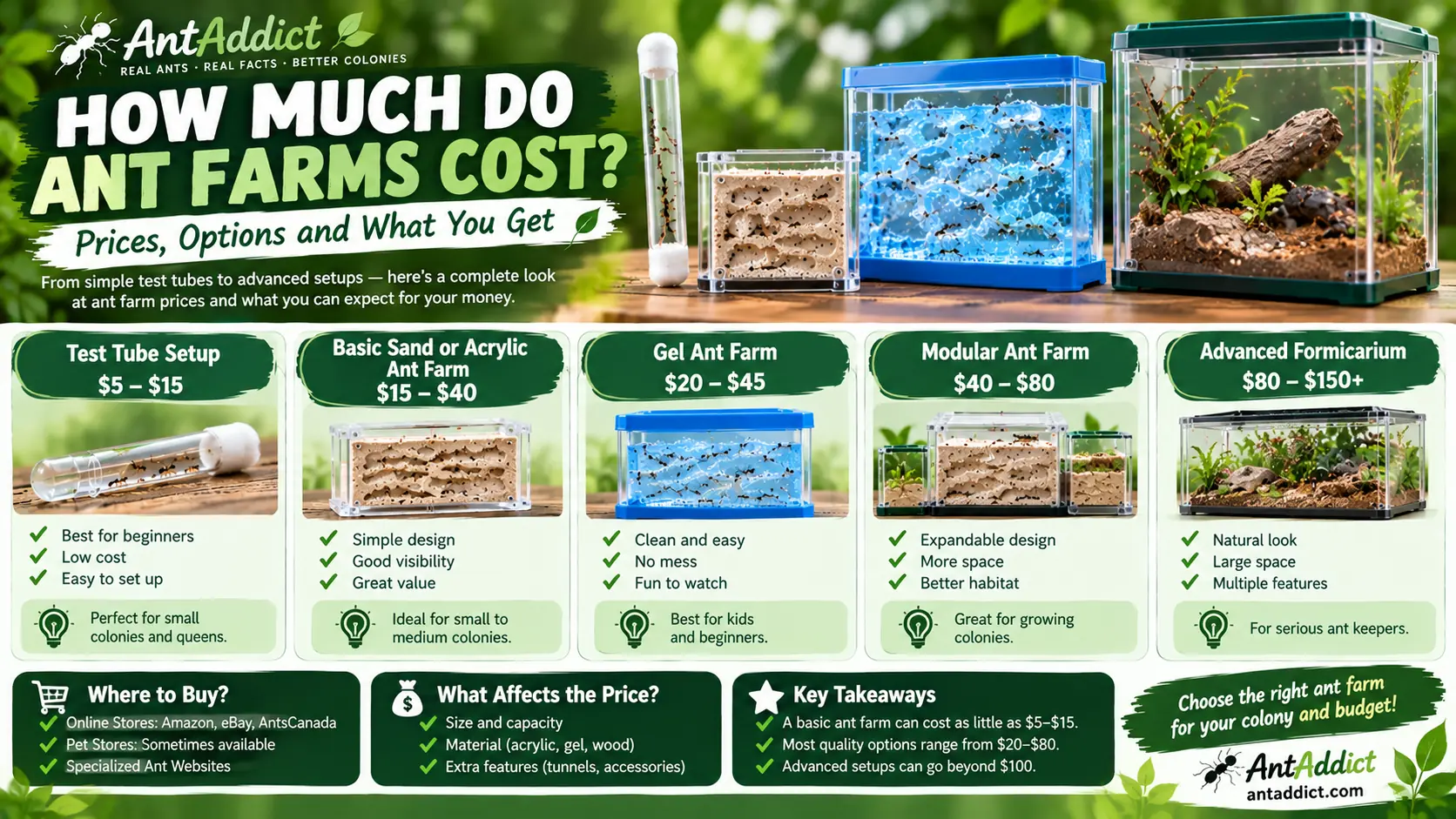
How much do ant farms cost? A toy ant farm costs about $12 to $34; the higher prices already include live worker ants, while habitat-only kits need ants that cost roughly $7 to $15 plus shipping. A real ant farm with a queen-right colony usually costs about $50 to $200 to start; queen-and-nest bundles from permitted sellers run about $90 to $200. Ongoing food costs only about $2 to $5 a month. The cheapest way to start is to catch your own queen and house her in a test tube for a few dollars.
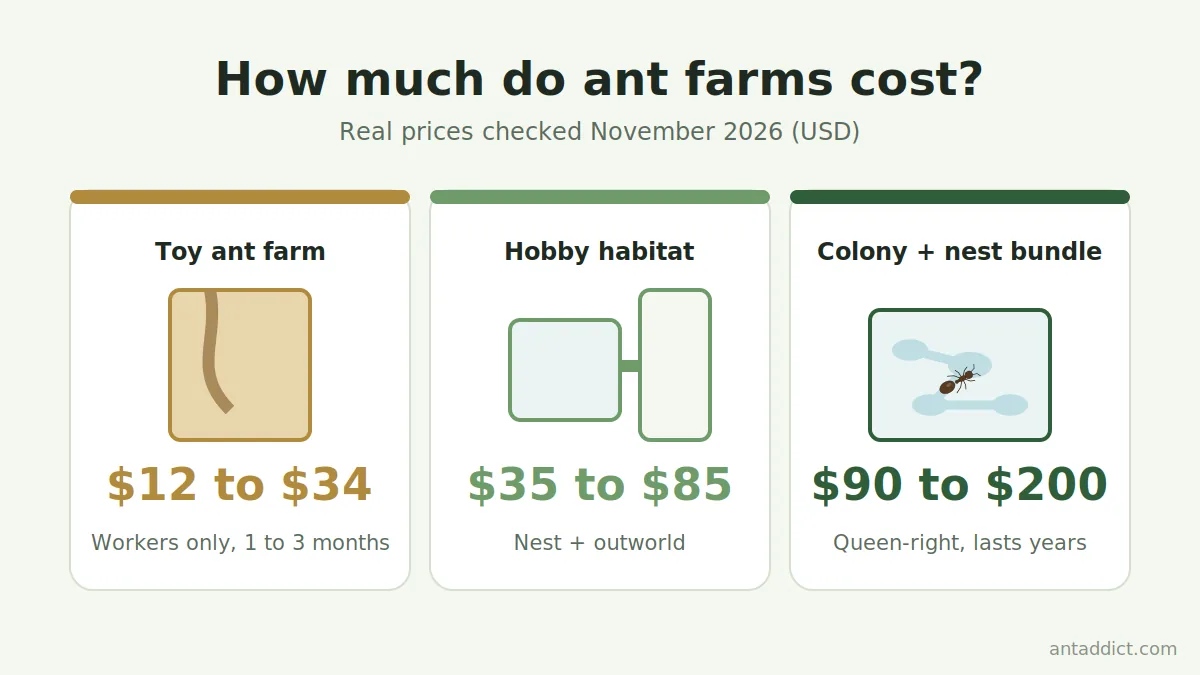
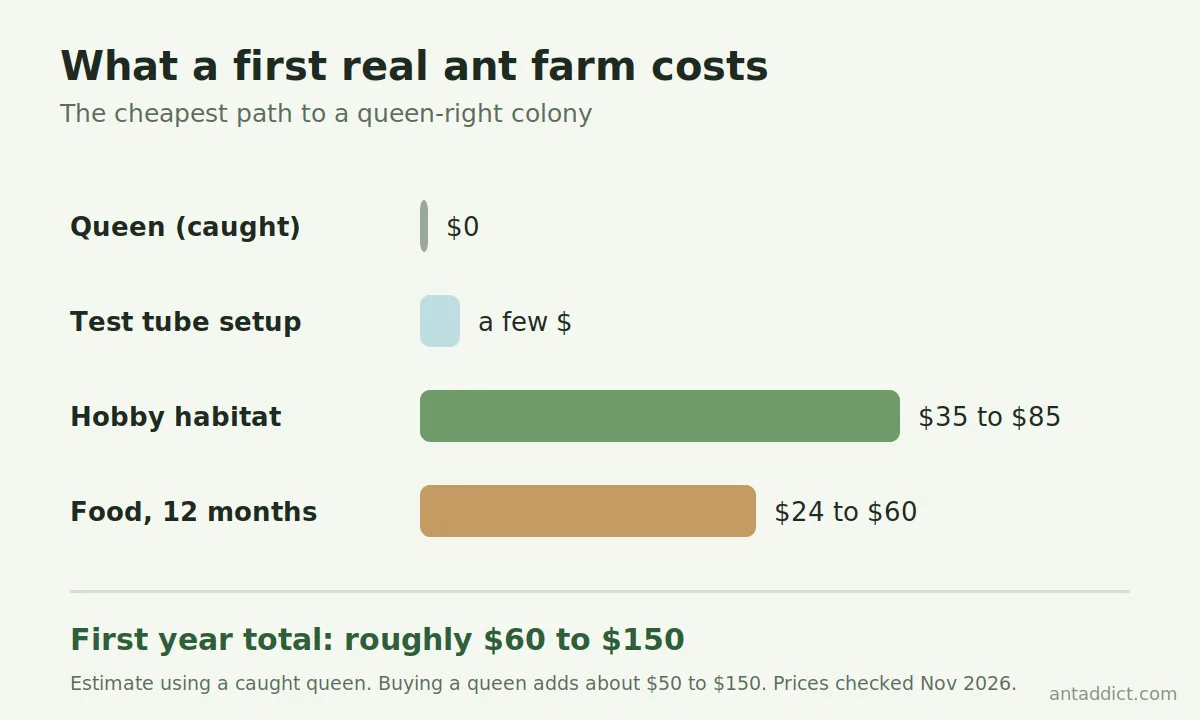
Where each option sits on the price scale
Food for a real colony adds about $2 to $5 a month. Prices checked November 2026.
I have kept ant colonies for six years, and the price question usually comes with a hidden second question: how long will it last? A $26 ant farm that empties in six weeks is not cheaper than a $100 setup that grows for years. So this guide gives you both numbers: what you pay up front, and what you really pay per month of ant keeping.
All prices below were checked on the sellers’ own websites in November 2026 and are in US dollars unless noted. Prices change, so treat them as a guide and check the current listing before you buy.
How much do ant farms cost? The short version
| What you buy | Typical price | What you get |
|---|---|---|
| Toy ant farm, no ants | About $12 to $20 | Plastic sand habitat with a coupon for ants |
| Toy ant farm shipped with live ants | About $26 to $34, plus shipping | Habitat plus a tube of worker ants, no queen |
| Replacement worker ants | About $7 to $15 | 30 to 90 harvester workers |
| Complete hobby habitat (nest + outworld) | About $35 to $85 | A formicarium built for a queen-right colony |
| Queen with workers from a permitted seller | About $50 to $150 | A real colony that can grow for years |
| Queen + workers + formicarium bundle | About $90 to $200 | Everything to start in one box |
| Ongoing food and supplies | About $2 to $5 per month | Sugar, protein, small consumables |
Sources: Lakeshore Learning, Nature Gift Store, ANT SHACK, Tar Heel Ants, and Canada Ant Colony, checked November 2026.
New to the whole idea? Start with our complete ant farm guide, then come back here to budget.
How much does a toy ant farm cost?
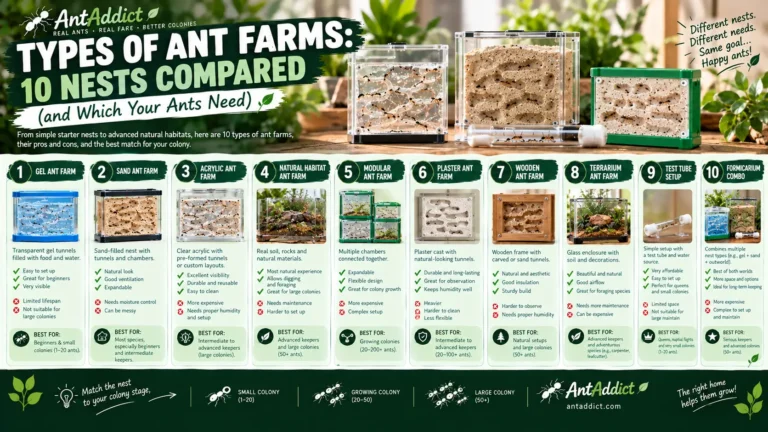
Toy ant farms are the cheapest way in. They are thin plastic habitats filled with sand or gel, and they usually come with a coupon or voucher for a tube of worker ants rather than the ants themselves.
- Habitat only: Lakeshore Learning’s classroom ant farm lists at $19.99 and was on sale for $11.99 when we checked. It includes tunneling sand and a coupon for live harvester ants; a buyer review notes the ants cost an extra fee, and ants ship only within the continental US.
- Habitat shipped with ants: Nature Gift Store sells the classic Uncle Milton ant farm and a blue gel habitat with live ants for $25.99, a lighted LED gel version for $30.99, and a gel “ecosystem” habitat for $26.99 to $33.99. The store charges a flat shipping fee on top.
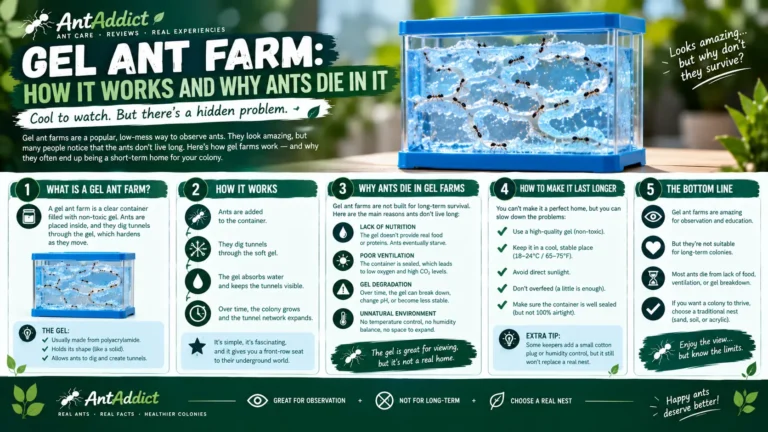
For the full story on the most famous kit, see our Uncle Milton ant farm guide. If you are looking at a blue gel model, read our gel ant farm guide first; gel habitats are not designed to support a growing colony.
How much do ants for an ant farm cost?
It depends on whether you want workers or a queen.
Worker ants for toy farms are cheap. Nature Gift Store sells red harvester workers at $6.99 for one tube (30 ants), $10.99 for two tubes (60), and $14.99 for three tubes (90). These are queenless workers, so they will not reproduce.
A queen with workers costs much more, because it is a living colony that can last for years. At Tar Heel Ants, queen-and-worker colonies of harvester, carpenter, and honeypot ants ranged from $50 to about $150 for the ants alone when we checked. Prices vary with species and colony size: a Pogonomyrmex occidentalis queen with 8 to 12 workers was $50 on sale, while a Myrmecocystus mexicanus honeypot colony with 8 to 12 workers was $149.99.
In the US, ants cannot be sold across state lines without a USDA permit, so permitted sellers only ship each species to the states their permits cover. Tar Heel Ants, for example, states that it only sends queens where its permits allow (Tar Heel Ants). That is also part of why toy kits ship workers only.
How much does a real ant farm (formicarium) cost?
A real ant farm, usually called a formicarium, is a nest built to house a queen-right colony, plus an outworld where the ants forage. Prices depend on material, size, and design.
- Complete hobby habitats: ANT SHACK’s ready-to-use habitats, made to order in Switzerland, ranged from US$35 for a small all-in-one habitat to US$85, with most kits priced at US$65 (ANT SHACK).
- Colony + nest bundles: Tar Heel Ants bundles that pair a queen and workers with a small formicarium ran from about $90 to $200 (Tar Heel Ants).
- Overall setup budget: Canada Ant Colony estimates a basic setup at about $50 to $100 USD and a high-quality or custom setup at about $100 to $175 USD (Canada Ant Colony).
Material matters more than brand. Our best formicarium guide compares acrylic, 3D-printed, Ytong, plaster, and sand nests, and explains why a small nest is better than a big one for a young colony.
What are the hidden costs of an ant farm?
The sticker price is rarely the full price. These are the costs that surprise new keepers:
| Hidden cost | Typical amount | Who pays it |
|---|---|---|
| Shipping live ants | Often around $9 to $11 per order at toy-kit stores; live-animal shipping at hobby stores varies | Everyone who buys ants online |
| Replacement ants for toy farms | About $7 to $15 per refill | Toy farm owners, every 1 to 3 months |
| Sand or gel refills | $4.99 for sand, $8.49 for gel at Nature Gift Store | Toy farm owners |
| Food | About $2 to $5 per month | Everyone with a real colony |
| Escape barrier (such as Fluon/PTFE) | A small one-time cost | Anyone with an outworld |
| Heating cable or mat | Optional; only for warmth-loving species | Some keepers |
| Expansion modules | Varies by brand | Keepers whose colonies grow |
Sources: Nature Gift Store; Canada Ant Colony.
One hidden cost is not about money at all. Temperate species such as Lasius need a cool winter rest, and Canada Ant Colony suggests a spot at about 41 to 53°F (5 to 12°C), such as a fridge, garage, or wine cooler. Many keepers use a space they already have.
Here is the part everyone else skips: the real cost is per month, not per box
Every price list compares sticker prices. That is the wrong number. A toy ant farm is cheap to buy but expensive to run, because its queenless workers cannot be replaced by the colony itself. Uncle Milton says its mailed ants live one to three months with proper care (Uncle Milton Ants FAQ). A queen-right colony, on the other hand, keeps producing new workers for as long as the queen lives, and queens of some species have lived for decades in captivity (University of Florida Book of Insect Records).
So divide what you spend by how long you get to watch ants:
| Setup | Up-front cost | How long it lasts | Rough cost per month |
|---|---|---|---|
| Toy ant farm shipped with ants | About $37 ($25.99 kit + about $11 shipping) | 1 to 3 months | About $12 to $37 |
| Bought colony + small formicarium | About $90 to $200 | Years (estimate over 2 years, plus $2 to $5/month food) | About $6 to $13 |
| Caught queen + test tube, then a hobby habitat Best value | About $35 to $85 (habitat), plus a few dollars for the tube | Years (estimate over 2 years, plus $2 to $5/month food) | About $4 to $9 |
Our estimates, built from the prices above. Two-year figures assume the colony survives; real results depend on your care and species.
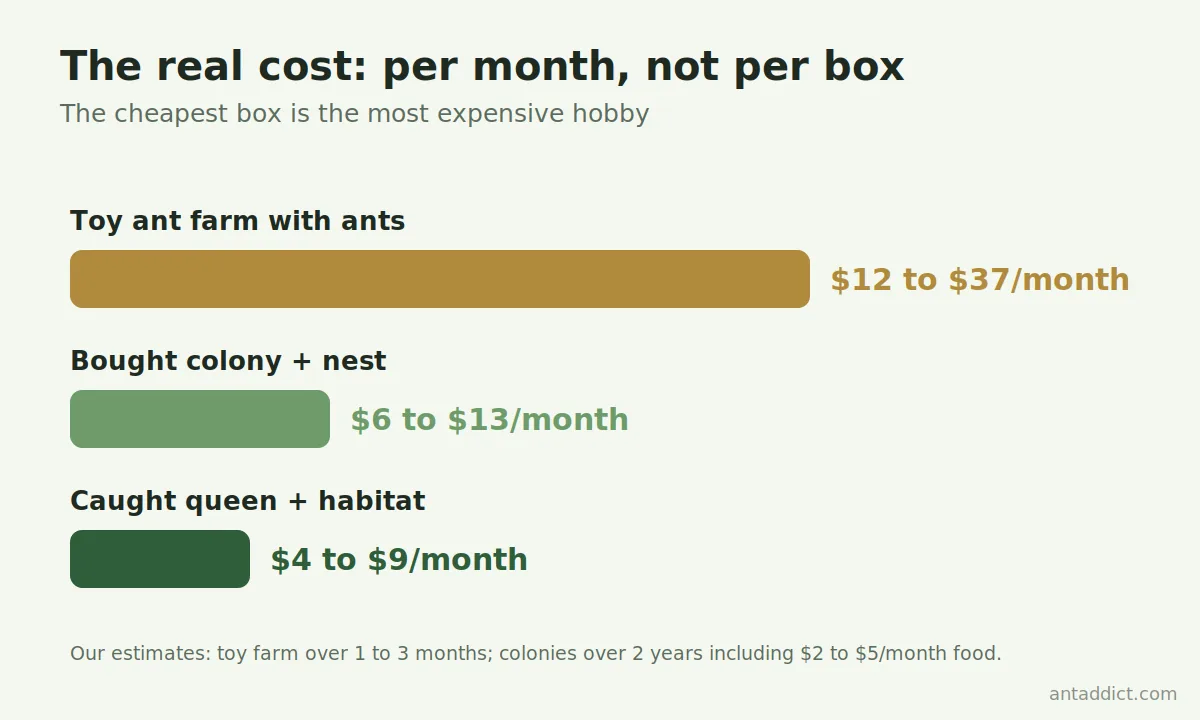
The cheapest box is the most expensive hobby per month. The cost of a real colony keeps falling the longer it lives, which is the strongest financial argument for skipping the toy and starting with a queen.
What is the cheapest way to start an ant farm?
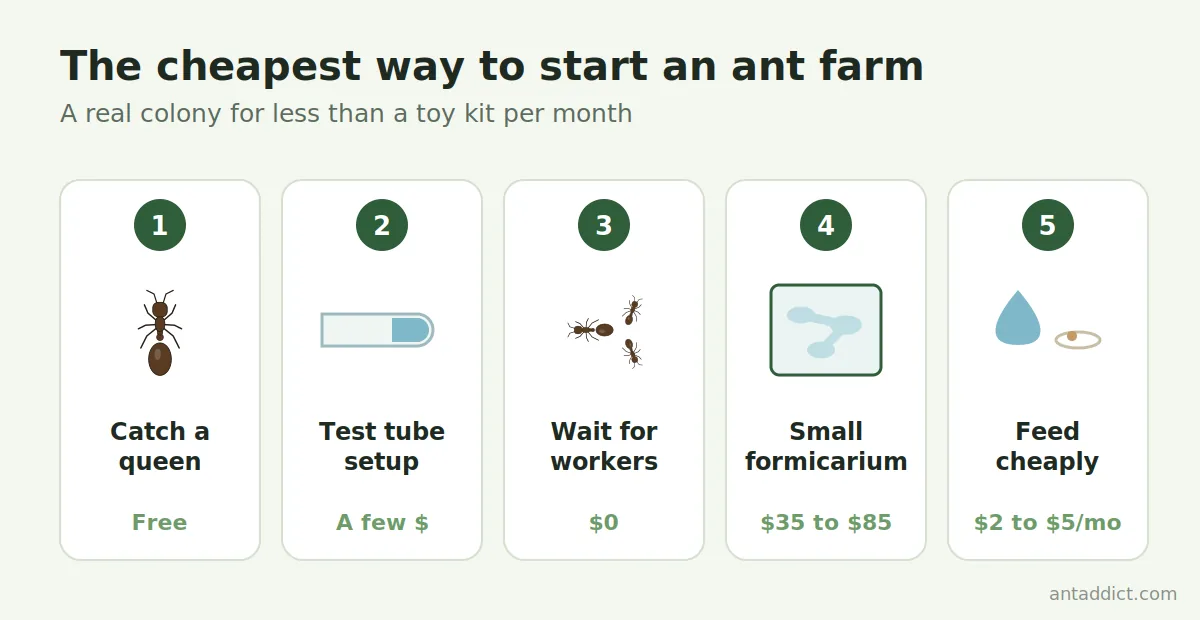
Catch a newly mated queen yourself. In the US, USDA recommends capturing local ants as the way to start, since you will not need a permit to move them across state lines (USDA APHIS). The queen is free; the main cost is your time during the nuptial flight season.
- Find a queen after a mating flight. Our guide on how to catch a queen ant shows you what to look for.
- House her in a test tube with water, a cotton plug, and a loose cotton entrance. Our ant test tube setup guide walks you through it.
- Wait for workers. Many founding queens raise their first workers without being fed.
- Buy a small formicarium only once the colony needs it, often at a few dozen workers. That is when the $35 to $85 spend makes sense.
- Feed cheaply. Sugar water and small insects cost very little. See what ants eat.
Is it cheaper to build a DIY ant farm?
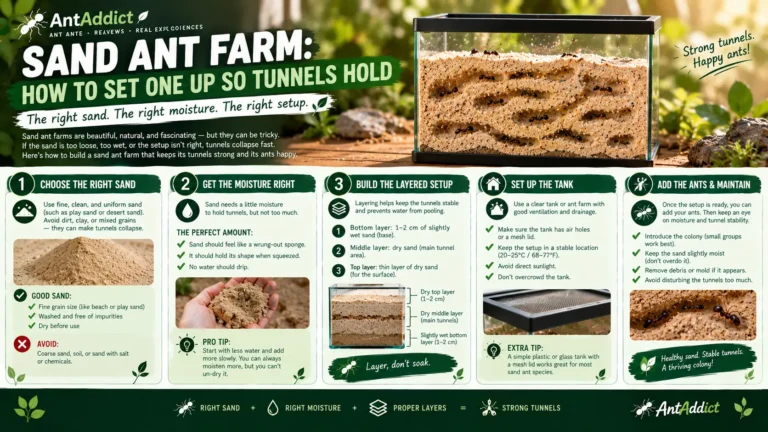
Usually, yes. A jar-in-a-jar sand farm uses two clear jars and damp sand, and a test tube setup uses a tube, water, and cotton. Both cost a few dollars. The trade-off is time and trial and error: moisture, escape-proofing, and viewing are harder to get right. Our sand ant farm guide covers the gap width and moisture that make DIY sand nests work.
Is a more expensive ant farm worth it?
Sometimes. Paying more makes sense for three things: a reliable hydration system, tight escape-proofing, and the ability to expand with modules. It does not make sense for size. A big, expensive nest for a young colony wastes money, because ants regulate their nest size to their population and leave unused space empty.
Keeper’s take
Spend your first money on a healthy queen and good escape-proofing, not on an impressive nest. A plain, small formicarium that fits the colony beats a showpiece the colony cannot use.
Which ant farm gives the best value?
- Best value for a short kids’ project: a toy sand farm with ants, about $26 plus shipping. Treat it as a one-to-three-month science lesson.
- Best value overall: a caught queen in a test tube, upgraded to a small hobby habitat. Lowest cost per month by far.
- Best value if you cannot catch a queen: a queen-and-workers bundle from a permitted seller in your state.
- Worst value: repeatedly refilling a toy farm with new worker ants.
For specific product picks, see our roundup of the best ant farm options.
The bottom line
So, how much do ant farms cost? Anywhere from about $12 for a bare toy habitat to around $200 for a queen-and-nest bundle. Toy farms are cheap to buy but expensive per month, because their queenless workers last only one to three months. Real colonies cost more up front but keep growing, with food costing only about $2 to $5 a month. The cheapest and best-value start is a queen you catch yourself, kept in a test tube until she needs a small formicarium.
Frequently asked questions
How much do ant farms cost?
A toy ant farm costs about $12 to $34. A real ant farm with a queen-right colony usually costs $50 to $200 to start.
How much does a toy ant farm with ants cost?
About $26 to $34 for a kit shipped with live worker ants, plus a shipping fee of roughly $9 to $11 at toy-kit stores.
How much do ants for an ant farm cost?
Worker ants for toy farms cost about $7 for 30 ants. A queen with workers from a permitted seller costs about $50 to $150.
How much does a queen ant cost?
Usually about $50 to $150 with a few workers, depending on species and colony size. Catching your own queen is free.
How much does a formicarium cost?
Complete hobby habitats start around $35, and most cost about $65. Bundles with a colony cost about $90 to $200.
How much does it cost to maintain an ant farm?
About $2 to $5 a month for food and small supplies. Toy farms also need replacement ants every one to three months.
What is the cheapest way to get an ant farm?
Catch a mated queen and keep her in a homemade test tube setup for a few dollars, then buy a small formicarium once she has workers.
Are cheap ant farms worth it?
For a short kids’ project, yes. As a long-term pet, no: their queenless workers last only one to three months.
Why do ant farms not come with a queen?
In the US, ants cannot be sold across state lines without a USDA permit, and toy-kit makers ship worker ants only. Permitted hobby sellers can ship queens to the states their permits cover.
Is a DIY ant farm cheaper?
Yes. A jar-in-a-jar sand farm or a test tube setup costs a few dollars, though it takes more effort to get moisture and escape-proofing right.
Is ant keeping an expensive hobby?
No. Start-up costs range from a few dollars (a caught queen in a test tube) to about $200 (a bought colony and nest), and a real colony then costs only a few dollars a month to feed.
Last reviewed: November 2026. Prices were checked on sellers’ websites in November 2026, are in US dollars unless noted, and change often; check current listings before buying. Cost-per-month figures are our estimates. This page contains Amazon affiliate links. As an Amazon Associate, Antaddict earns from qualifying purchases at no extra cost to you.
References
- Lakeshore Learning. Ant Farm (BR763). lakeshorelearning.com
- Nature Gift Store. Ant Farm Kits + Live Ants. nature-gifts.com
- ANT SHACK. Complete Ant Habitats (Ready to Use). ant-shack.com
- Tar Heel Ants. Queen Ants and Colonies for Sale. tarheelants.com
- Canada Ant Colony. (2024, October 13). Ant Colony Checklist: Starting Your First Ant Farm. canada-ant-colony.com
- Uncle Milton. Ants FAQ. unclemilton.com
- Cetintas, R. (1998). Chapter 34: Longest Adult Life. University of Florida Book of Insect Records. entnemdept.ufl.edu
- USDA APHIS. Invertebrate Pets. aphis.usda.gov