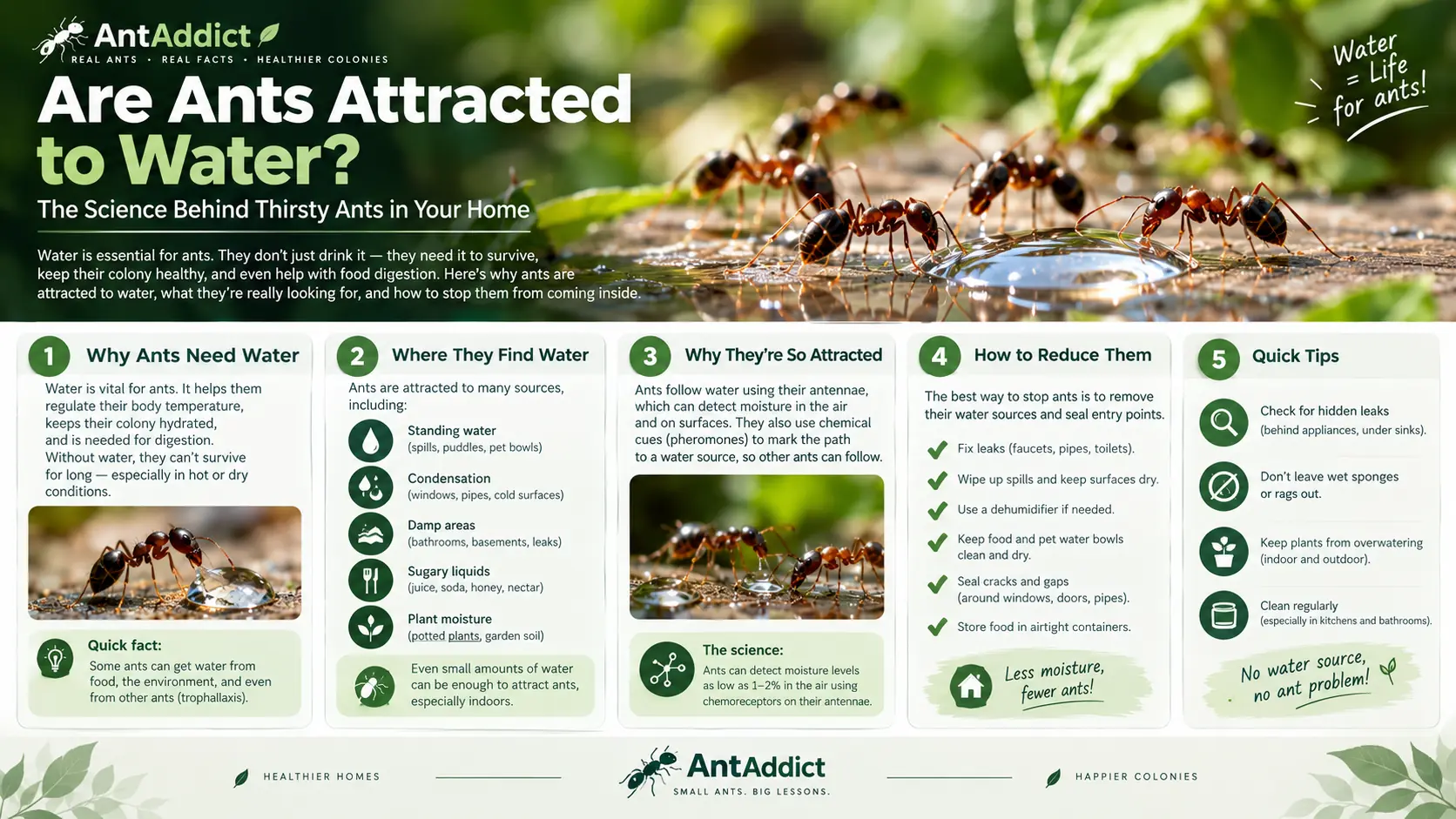
Are Ants Attracted to Water? The Science Behind Thirsty Ants in Your Home
Why a dripping faucet, a pet bowl, or a rainy week can pull an entire colony through your walls
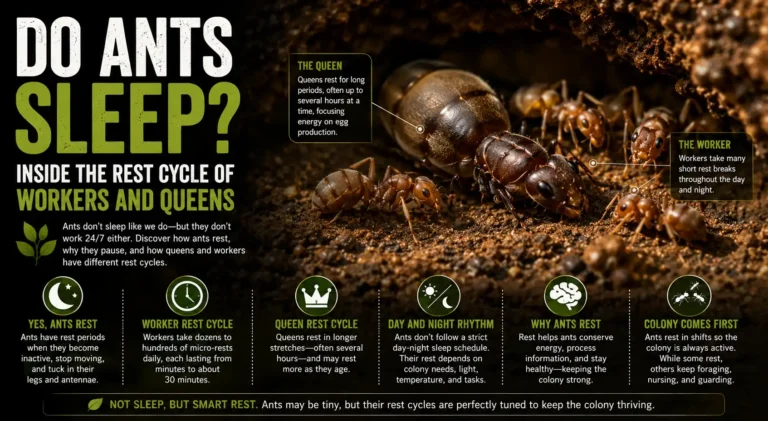
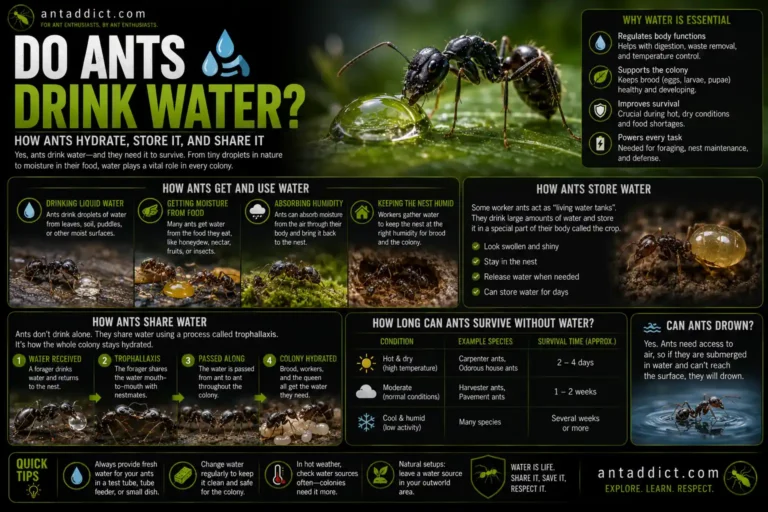
Quick Answer: Yes, ants are attracted to water. Worker ants sense humidity through specialized sensors on their antennae, and once a scout finds a reliable source (a leaky pipe, a wet sink, a pet bowl, a sweating AC line), she lays a trail and recruits nestmates. But water alone does not explain most invasions. A long-term household study found indoor Argentine ant numbers peaked in cold, rainy weather, with a smaller second peak in hot, dry spells. Ants come inside for water, for stable humidity, and for shelter from bad weather.
Are ants attracted to water? After six years of keeping ant colonies, I can tell you the answer shows up within minutes of setting up any new nest. The first thing workers map is not the food. It is the water.
That instinct does not switch off when the ants live in your yard instead of on my shelf. This guide covers how ants detect water, why some species are far thirstier than others, why your ant problem may spike after rain instead of during drought, and exactly how to cut off the water that keeps them coming back.
Are ants attracted to water, or just to food?
Both, but they are separate drives. Ants need sugar for energy, protein for growing brood, and water to stay alive. A colony runs all three searches at once, and each one can produce its own trail.
The tell for a water trail: ants clustered at the drain lip, under the faucet base, around the dish rack, or on the rim of a pet bowl, with nothing edible nearby. Most pest-control pages lump water into a generic list of “things that attract ants.” That misses the point. Water attraction follows different rules from food attraction, with different timing and different fixes.
If you want the food side of the story, our guide to what ants eat breaks down the sugar and protein drives in detail.
How do ants find water?
Ants do not smell water the way they smell sugar. Studies on cockroaches and stick insects show that insects detect humidity with specialized antennal sensilla containing paired “moist” and “dry” neurons, which respond to both the humidity level and how fast it is changing (Tichy & Kallina, 2010).
Ants carry this hardware too. When researchers mapped every sensillum on the antenna of the carpenter ant Camponotus japonicus, they identified coelocapitular sensilla, a type the authors considered likely to detect humidity and temperature (Nakanishi et al., 2009).
In practice, a forager walking through your wall void reads a humidity gradient. Air near a slow drip, a damp sill plate, or a cold pipe beaded with condensation is measurably wetter. She follows that gradient to the source, drinks, and heads home laying a pheromone trail. Within hours you have a highway.
Why do ants need water so badly?
Because they are tiny. Small bodies have a huge surface area relative to their volume, and insects lose water constantly through their cuticle and breathing pores. In warm, dry air, a worker ant dries out fast.
Some species are far more fragile than others. When researchers compared the invasive Argentine ant (Linepithema humile) with five native Southern California species, body size strongly predicted water balance, and Argentine ants lost water faster than the natives even after correcting for surface area (Schilman, Lighton & Holway, 2007). That one physiological weakness explains a lot of summer kitchen invasions.
Water matters to the colony, not just the worker. Eggs, larvae, and pupae need stable humidity to develop. A nest that dries out loses brood, which is why colonies move toward moisture as a whole, not just send out thirsty individuals.
Are ants more attracted to water when it’s dry or when it rains?
This is where most advice gets it backward. The popular story says drought makes ants thirsty, so they invade. That is only half true.
A Stanford team led by Deborah Gordon had 69 San Francisco Bay Area households report Argentine ant numbers every week for 18 months, then compared the reports with weather data. Indoor ant abundance was highest in cold, rainy weather, with a second, smaller peak in hot, dry weather (Gordon et al., 2001). Household pesticide use only reduced numbers from one week to the next when infestations were already extremely high.
So there are two different triggers using the same front door:
- Rain: water floods shallow nests, and the colony evacuates toward dry, stable shelter. Your wall voids qualify.
- Heat and drought: soil dries out, natural water disappears, and foragers go looking for the most reliable source in the neighborhood. Your kitchen qualifies.
You see the drought peak play out every hot summer. In August 2023, during Central Texas’s record heat, Austin residents were swapping notes online about ants pouring into their homes looking for water. That is the hot, dry peak in action.
The fix depends on which peak you are in. In drought, cut off the water. In the rainy season, seal entry points and keep wall cavities dry.
Which ants are most attracted to water?
Not all ants respond the same way. Some come in to drink, some come in to nest in wet material, and some only show up when their outdoor nest floods.
| Species | Water attraction | What pulls them inside | What it usually signals |
|---|---|---|---|
| Argentine ant (Linepithema humile) | Very high | Drought and heavy rain; fast water loss | Seasonal invasion, often from outdoors |
| Odorous house ant (Tapinoma sessile) | High | Sinks, pipes, wall voids near plumbing | Foraging or a satellite nest near water |
| Pharaoh ant (Monomorium pharaonis) | High | Warm, humid indoor spots like bathrooms | Indoor-nesting colony; do not spray |
| Moisture ants (Lasius spp.) | Very high (nesting) | Decaying, water-soaked wood and damp soil | Hidden water damage |
| Carpenter ants (Camponotus spp.) | High (nesting) | Wood softened by leaks or rot | Possible leak and wood damage |
| Pavement ant (Tetramorium immigrans) | Moderate | Slab cracks, especially after rain | Outdoor colony under the foundation |
Argentine, odorous house, and pharaoh ants mostly come in to drink or to find humid shelter. Moisture ants and carpenter ants are the ones to worry about, because their nests can point to water you have not found yet.
Where do ants find water inside your home?
Ants find water you forget exists. These are the sources I see most often, roughly in order:
- Slow drips under the kitchen sink and around the P-trap
- Wet sponges, dish racks, and a sink left wet overnight
- Bathroom sink edges, tub caulk lines, and the base of the toilet
- Condensation on cold water pipes and toilet tanks in humid weather
- AC condensate lines and their drip pans
- Refrigerator drip pans and ice-maker supply lines
- Pet water bowls
- Houseplant saucers with standing water
- Wet window sills from condensation
- Damp basements, crawl spaces, and sump areas
If you have a trail with no obvious destination, check the AC drip pan and the fridge drip pan first. They are hidden, permanently wet, and almost nobody cleans them.
Why are there ants in my bathroom with no food?
Because the bathroom is the most reliably humid room in the house. Sinks, tubs, and toilet bases hold water, cold surfaces collect condensation, and drains carry a film of organic residue.
Odorous house ants and pharaoh ants both favor warm, humid indoor spots, and bathrooms tick every box. Bathroom ants usually do not come up the drain itself. They travel through the gaps where pipes pass through the wall behind the vanity or under the tub.
One warning sign: if bathroom ants are larger, emerge from baseboards or window frames, or leave piles of sawdust-like debris, look for a leak. That pattern points to carpenter ants or moisture ants nesting in wet wood.
Why do ants end up in a glass of water?
This one confuses people because the glass is clean. Three things are going on.
First, a cold glass sweats. Condensation on the outside is free water, and ants find it. Second, a “clean” glass often holds a thin film from juice, soda, or tea. Third, in a dry house, a glass of plain water is simply the best water source around.
Ants drink from the edge, slip on the curved surface, and get trapped. Surface tension is a real wall for an insect that small. Cover drinks overnight and do not leave glasses on the nightstand during a dry spell.
Are ants attracted to wet soil and lawn irrigation?
Yes, and this is one of the most overlooked causes of ant problems. In a field experiment in Southern California, researchers added water to plots where Argentine ants were invading. After three months, irrigated plots had 54% more Argentine ant nests, and when the water was shut off, the ants gradually pulled back to control levels over the next three months. Water, not plant cover, was the main driver (UC San Diego, 2006; Menke & Holway, 2006).
If your sprinklers soak the soil against your foundation every evening, you are farming ants next to your walls. Water early in the morning, deep and less often. Fix sprinkler heads that hit the siding. Point downspouts away from the house, and keep mulch about 12 inches (30 cm) back from the foundation.
Do ants in the house mean you have a leak?
Sometimes. It depends on the species and what they are doing.
Foraging Argentine ants or odorous house ants at your sink only tell you water is available. They do not necessarily mean anything is damaged.
Nesting ants are a different story. Moisture ants are tied to decaying, wet wood and damp soil (WSU PestSense), and carpenter ants often nest in wood softened by moisture. Winged ants indoors, sawdust-like debris, or ants coming out of window frames and wall voids are all reasons to inspect for hidden water. Our guide to carpenter ants on your house covers that inspection step by step.
Here is the part everyone else skips: water is a colony budget, not a craving
Every guide treats ant thirst like a simple urge. It is closer to an accounting decision.
Ants have to spend water to get water. Every forager trip through warm, dry air costs body water. Research on red harvester ants (Pogonomyrmex barbatus) showed colonies lose water as workers forage, and that foragers from colonies that cut back foraging in dry conditions were more sensitive to water loss (Friedman et al., 2019). Colonies regulate their effort based on what dryness costs them.
That changes how you should read a trail. When a colony commits workers to a long trail into your kitchen in July, it has effectively decided your water is worth the cost. Remove the payoff and the math flips. In my experience, a water trail collapses within a day or two once the source is truly dry.
It also explains two things homeowners find frustrating:
- Why spraying the trail fails. You kill a few dozen foragers. The colony’s water need is unchanged, so it sends more.
- Why liquid baits work. Foragers carry liquid home in their crop (a “social stomach”) and share it mouth to mouth with nestmates, a behavior called trophallaxis. A bait that rides the water-and-sugar pipeline gets distributed through the whole colony.
How do you stop ants that are coming in for water?
Work through these in order. Most water-driven invasions end by step four.
- Find the source. Follow the trail when it is busiest (often evening for common household species) to both the water and the entry point.
- Fix the water. Repair drips, insulate sweating pipes, and clear AC condensate lines and drip pans.
- Dry the kitchen nightly. Wipe the sink, wring out sponges, empty the dish rack, and leave no standing water.
- Moat the pet bowl. Set the bowl inside a wider shallow dish of water with a drop of dish soap. The soap breaks surface tension, so ants cannot cross.
- Dehumidify. Run a dehumidifier in basements and crawl spaces and aim for indoor humidity at or below about 50%.
- Seal the plumbing gaps. Caulk around pipe penetrations under sinks and behind toilets.
- Fix the outdoors. Adjust irrigation, clean gutters, and pull wet mulch away from the foundation.
- Bait, do not spray. During dry spells, place a liquid or gel sugar bait directly on the trail. Avoid repellent sprays on pharaoh ants, which can split colonies into more nests.
- Expect the weather to help. Gordon’s data suggests rain-driven invasions often recede when conditions change, especially once the indoor water is gone.
Will the ants leave on their own?
Often, yes, if they were only visiting. Foragers that came in for water during a heat wave or a storm tend to drop off once the weather turns and the indoor source is gone.
They will not leave on their own if they are nesting inside. Carpenter ants in a damp wall or pharaoh ants in a warm bathroom void have moved in. That calls for finding the nest, fixing the moisture, and targeted baiting.
How do ants use water in a keeper’s setup?
Ant keepers see water attraction up close every day. In a test tube setup, the colony lives beside a water reservoir held back by a cotton plug. Workers drink from the damp cotton, and the queen and brood usually sit in the zone between wet and dry.
Get the balance wrong and you see both failure modes. Too dry, and brood shrivels while workers crowd the cotton. Too wet, and mold blooms while the colony moves away from the water. Colonies are not attracted to water in a simple “more is better” way. They are attracted to the right humidity.
That is the same reason your bathroom and your wet sill plate look like prime real estate.
For the full picture of how ants drink, breathe, survive flooding, and handle humidity, see our book Ants and Water: The Complete Manual.
My keeper’s take
I have watched colonies ignore a fresh drop of honey to drink first. Water comes before almost everything.
Most homeowners fight water-driven ants with the wrong tool. They spray the trail, wipe the counters, and wonder why the ants are back the next morning. The colony was never there for crumbs. Cut the water, dry the room, and give the trail a day or two. If ants keep coming from inside the walls after that, stop treating it as an ant problem and start treating it as a moisture problem.
The bottom line
So, are ants attracted to water? Yes. Ants detect humidity with their antennae, follow moisture gradients to leaks and wet surfaces, and recruit nestmates once they find a reliable source. Species like the Argentine ant are especially vulnerable to drying out, and both drought and heavy rain push colonies indoors.
The fix is not more spray. Find the water, remove it, dry the space, and use bait if the colony stays. If the ants are nesting in wood, treat it as a warning sign of hidden moisture and inspect before the damage spreads.
FAQ
Are ants attracted to water?
Yes. Ants need water to survive and detect humidity with sensors on their antennae. Once a scout finds a reliable source, such as a leak, a wet sink, or a pet bowl, she lays a pheromone trail and recruits other workers to it.
Can ants smell water?
Not in the way they smell sugar. Insects sense humidity with specialized antennal sensilla containing “moist” and “dry” neurons. Ants follow these humidity gradients toward damp areas, leaks, and condensation.
Why are ants suddenly in my house after rain?
Heavy rain floods shallow outdoor nests, and colonies move to dry, stable shelter like wall voids. A long-term Argentine ant study found indoor ant numbers peaked in cold, rainy weather.
Why are ants in my house during a drought?
Dry soil removes natural water sources, so foragers search for the most reliable water nearby. Kitchens and bathrooms are often the best option. Hot, dry weather produced a second peak of indoor ants in the same study.
Why are there ants in my bathroom?
Bathrooms are the most humid rooms in most homes, with water at sinks, tubs, and toilet bases plus condensation on cold surfaces. Ants usually enter through gaps around pipes rather than through the drain itself.
Are ants attracted to pet water bowls?
Yes. A pet bowl is a permanent, easy water source at floor level. Set the bowl inside a wider dish of soapy water to create a moat ants cannot cross.
Why do ants get into a glass of water?
A cold glass collects condensation, it may hold a residue of a sugary drink, and in a dry house plain water is attractive on its own. Ants drink from the edge, slip, and get trapped by surface tension.
Does lawn watering attract ants?
It can. In a field experiment, irrigated plots had 54% more Argentine ant nests after three months, and the ants retreated after the water was turned off. Avoid soaking soil right against your foundation.
Do ants in the house mean I have a water leak?
Not always. Ants foraging at a sink only mean water is available. Ants nesting in wood, such as carpenter ants or moisture ants, often point to hidden leaks or water-damaged wood.
Does a dehumidifier keep ants away?
It helps in basements, crawl spaces, and bathrooms by removing the humidity that draws moisture-loving ants. Keeping indoor humidity at or below about 50% makes these spaces less attractive.
Will ants leave if I remove the water?
Foraging ants often abandon a water trail within a day or two once the source is truly dry. Ants nesting inside your walls will not leave on their own and need the nest and moisture problem addressed.